Choosing a B2B data vendor is a high-stakes decision made with limited information. Every vendor claims accuracy, coverage, and compliance; few volunteer the details that separate a genuinely good provider from one selling recycled, scraped, or stale data. This article gives you the evaluation framework — the questions to ask, the answers to expect, and the red flags that should end a conversation.
The evaluation framework
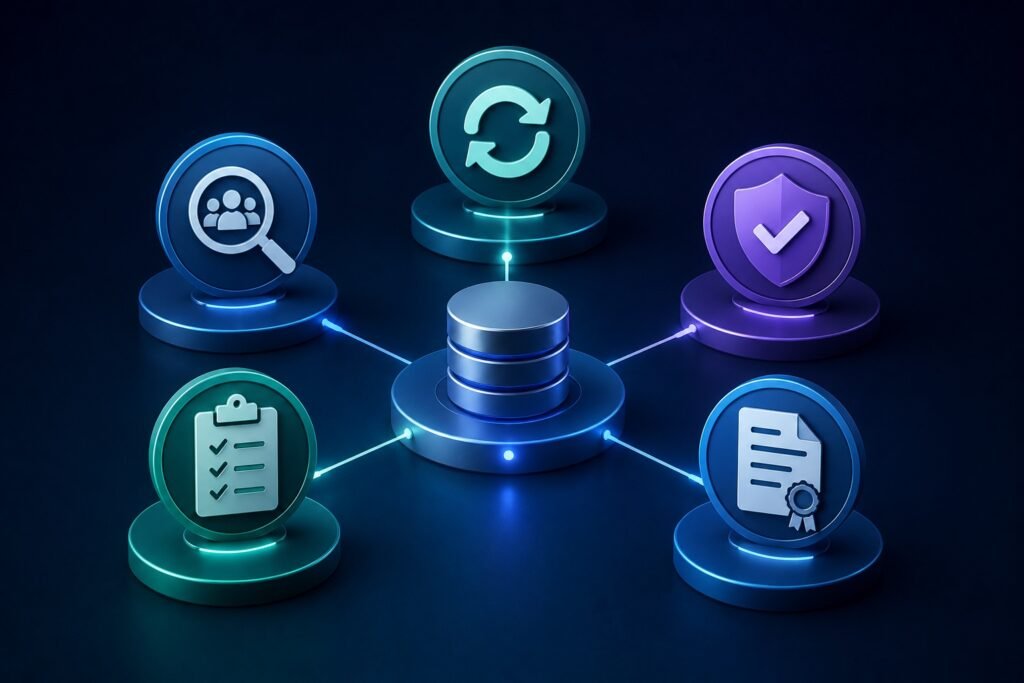
Evaluating a B2B data vendor comes down to five areas, each with questions that reveal whether the vendor is built on substance or marketing.
Sourcing — where the data actually comes from. A vendor should be able to explain their sources specifically (primary research, public filings, licensed partnerships, opt-in channels) rather than hiding behind “proprietary technology.” Vague sourcing answers usually mean scraping or recycling.
Verification — how the data is validated before delivery. Look for multi-signal verification: email validation, postal standardization, firmographic cross-reference. A vendor that can’t describe their verification process probably doesn’t have much of one.
Freshness — how often the data is refreshed and how decay is handled. Given that B2B data decays around 30% per year, refresh cadence is central to whether the data will actually work.
Compliance — what documentation backs the data’s lawful use. CAN-SPAM compliance, opt-in provenance where applicable, suppression handling, and willingness to provide documentation.
Proof — whether the vendor will let you verify their claims. A representative sample before purchase is the single most important thing a vendor can offer. Refusal to sample is the loudest red flag in the industry.
Common questions
What should you ask a B2B data vendor before buying?
Ask questions about
coverage, accuracy, freshness, sourcing, verification, compliance, pricing, and support. Start by asking whether the vendor actually covers your target industries, company sizes, locations, and job roles. Then ask how each critical field is sourced and verified, when it was last updated, how bad records are handled, and what you receive for the price.
How should you evaluate the accuracy of a B2B data vendor?
Do not rely solely on a vendor’s overall accuracy percentage. Ask for
field-level accuracy for email, phone, job title, company affiliation, industry, employee count, and other fields you actually need. Request a representative sample from your target market and independently verify it. A vendor claiming 95% accuracy should be able to explain exactly what that 95% represents.
How important is data freshness when choosing a B2B database?
Very important. B2B information changes continuously as people change jobs, companies restructure, businesses grow, and contact information becomes invalid. Ask when individual fields were last verified and how frequently records are refreshed. A vendor that provides timestamps or freshness indicators gives you more useful information than one that simply says its database is “regularly updated.”
What should you ask about the vendor’s data sources?
Ask whether the data is
first-party, licensed, publicly sourced, scraped, contributed, or aggregated from other providers. Find out how many upstream sources are involved and how information from different sources is reconciled. You do not necessarily need every proprietary source disclosed, but the vendor should be able to explain its overall sourcing methodology and provenance.
How should you test a B2B database before purchasing?
Request a sample based on your
actual ICP, including your target industries, locations, company sizes, and job titles. Then independently check a meaningful sample for email validity, phone accuracy, current employment, title accuracy, company matching, and missing fields. If possible, run the same sample through multiple vendors so you can compare results using identical criteria.
What questions should you ask about company and contact coverage?
Ask how many companies and contacts the vendor has
in your specific target segment, not just how many records exist overall. Confirm coverage by geography, industry, employee count, revenue, job function, seniority, and company type. A database with 100 million contacts may have less useful coverage for your ICP than a specialist database with a fraction of that total.
How should you evaluate the vendor’s decision-maker data?
Ask whether the database distinguishes between
job title, department, seniority, and actual buying responsibility. A title such as “Director” does not necessarily mean the person is the relevant decision-maker. Find out how the vendor identifies executives, department heads, influencers, and other stakeholders, and how frequently those roles are updated.
What should you ask about email and phone verification?
Ask how email addresses and phone numbers are validated, what “verified” means, when verification occurred, and what happens when information becomes invalid. For phone data, distinguish between
valid number, assigned number, direct dial, mobile number, and successful connection. For email, distinguish between syntactically valid, deliverable, and confirmed-to-belong-to-the-person addresses.
What should you ask about data compliance?
Ask the vendor to explain its
data sourcing, privacy, licensing, opt-out, suppression, and permitted-use processes. Do not accept a generic statement such as “GDPR compliant” as sufficient. The legality of using B2B contact data can depend on the source, jurisdiction, recipient, purpose, and communication method. You should also understand what compliance responsibilities remain with you as the buyer.
How should you compare B2B database pricing?
Compare
cost per usable and qualified record, not simply the subscription price or cost per credit. Include the cost of additional seats, exports, phone numbers, enrichment, API access, integrations, and other add-ons. A cheaper database can become more expensive if it has high duplicate rates, poor accuracy, or insufficient coverage of your target audience.
What should you ask about contracts and data usage rights?
Confirm how many records you can access or export, whether exported data can be stored in your CRM, how long you can retain it, whether you can use it across multiple campaigns, and what happens when your subscription ends. Also check whether there are restrictions on sharing data with agencies, contractors, or other systems.
What guarantees should a good B2B data vendor provide?
Look for clear policies covering
invalid records, duplicates, inaccurate information, replacement credits, refunds where applicable, and service-level commitments. Ask how claims are submitted and how quickly corrections are made. A strong guarantee should be specific enough that you can calculate the actual financial protection it provides.
What are the biggest red flags when evaluating a B2B data vendor?
Be cautious if a vendor:
- Cannot explain where its data comes from.
- Uses a vague overall “accuracy” percentage.
- Refuses to provide a representative sample.
- Cannot provide freshness information.
- Has unusually large coverage claims without segment-level evidence.
- Uses “verified” without explaining the verification process.
- Hides important costs behind credits or add-ons.
- Makes broad compliance claims without documentation.
- Offers no meaningful correction or replacement policy.
What is the most important question to ask a B2B data vendor?
Ask:
“Can you prove that your data works for my exact ICP?”
The best evaluation is not based on the vendor’s total database size, brand reputation, or marketing claims. Give several vendors the same target criteria, test comparable samples, measure
coverage, completeness, accuracy, freshness, and cost per usable record, and then choose the provider that performs best against the data problems your business actually needs to solve.
How this applies to your business
The discipline that protects you is simple but rarely followed: never buy B2B data on claims alone. Define your exact specification, request samples from multiple vendors under that identical specification, verify the samples independently, and ask the sourcing, verification, freshness, and compliance questions of each. An hour of diligence prevents the expensive, reputation-damaging mistakes that bad data causes.
Weight the sample above everything else. Marketing claims are free; a sample is evidence. Fifty records you can check beat any accuracy percentage a vendor quotes. If a vendor won’t sample, that decision is made for you — move on regardless of how good the pitch sounds.
Finally, evaluate coverage in your specific segment, not the headline database size. The vendor with the best overall numbers may be the wrong choice for your niche, and the vendor with a smaller but deeper database in your target industries may serve you far better. Ask for counts under your exact criteria, every time.
Iscope Digital’s
B2B Email & Postal Data service answers all five evaluation areas directly — proprietary
Bizline Direct database, documented multi-signal verification, weekly refresh, compliance documentation, and representative samples before any purchase. For the sourcing questions in depth, see
Where does B2B contact data come from? and on verifying accuracy claims,
How accurate is B2B contact data?