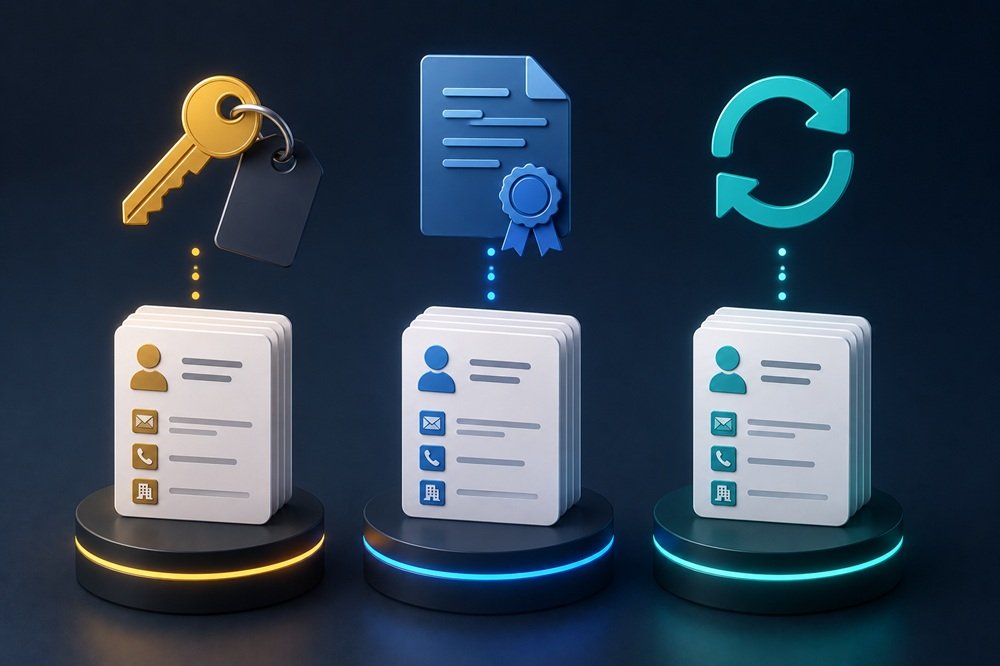
The same B2B list can be acquired several different ways — rented, licensed, purchased outright, or accessed by subscription — and each model carries different rights, costs, and obligations. Choosing the wrong model means either overpaying or, worse, using data in ways your agreement doesn’t permit. This article explains each model and when to use it.
The acquisition models
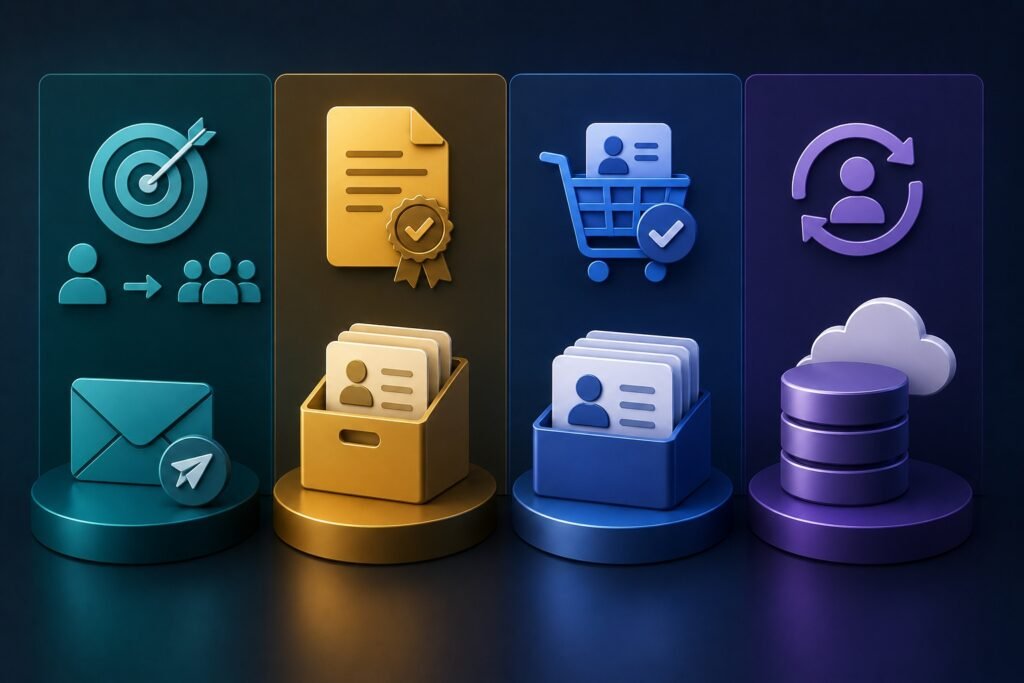
B2B data is acquired under four main models, distinguished mainly by what usage rights you receive and for how long.
List rental grants one-time use of a list without transferring the records to you. Often the rental provider executes the campaign on your behalf — you supply the creative, they deploy to the list, and you receive only the responders (people who clicked, replied, or converted). You never hold the underlying records. Common for specialty and consumer lists; less common for standard B2B.
License grants the right to use a dataset for a defined period and defined purposes — you hold and use the records, but within agreed terms (time limits, usage restrictions, no resale). It sits between rental and outright purchase.
Outright purchase (per-record) transfers records to you for unlimited use, typically priced per record with volume tiering. You own the records and can use them repeatedly within compliance law, though they decay without refresh.
Subscription grants ongoing access to a continuously maintained database for a recurring fee, usually with record limits or credits per period and including refresh. You access current data continuously rather than buying a static snapshot.
The right model depends on how often you’ll use the data, whether you need ongoing freshness, and how much control you need over the records.
Common questions
What is B2B data rental?
B2B data rental generally means
temporary, limited access to a contact or company dataset for a specific campaign or period. The vendor retains control of the underlying data, and the agreement may restrict how many times you can use it, where you can store it, or whether you can share it. Traditional list-rental arrangements often limit usage to a particular campaign.
What is B2B data licensing?
A data license gives your company
defined contractual rights to use the vendor’s data without transferring ownership of the underlying dataset. The agreement typically specifies the permitted uses, duration, geography, users, storage, exports, refreshes, and what happens when the contract ends.
What is a B2B data subscription?
A subscription usually provides
ongoing access to a data product or platform for a recurring fee. You may access records through a web application, API, CRM integration, or another interface while the subscription remains active. Subscription agreements normally define the price, duration, payment terms, usage rights, and other conditions.
What is the difference between renting and licensing B2B data?
The biggest difference is
how broadly you can use the data. Rental tends to be campaign-specific or tightly restricted, while licensing can provide broader rights for a defined period. For example, a license might allow internal CRM enrichment or repeated prospecting during the license term, whereas a rental may permit only one campaign. The exact distinction always depends on the contract.
What is the difference between licensing and subscribing to B2B data?
The terms can overlap. A subscription describes the
commercial access model, while a license describes the
legal rights granted to use the data. A subscription can therefore include a data license. For example, you might pay annually for access to a B2B database while the accompanying agreement grants specific rights to search, export, enrich, or use the records.
Which model is best for a one-time B2B campaign?
A rental or short-term license can make more sense when you only need data for a single campaign. You avoid paying for long-term access to records you may not use again. However, verify exactly what happens to leads generated from the campaign and whether you are allowed to retain those contacts in your CRM.
Which model is best for ongoing sales prospecting?
A subscription or recurring license is usually more practical when sales teams continuously need new prospects. Ongoing access can also provide database updates and refreshes, which are important because B2B contact information becomes outdated over time. Some licensing models explicitly include recurring refresh cycles.
Which model is best for CRM enrichment or internal data operations?
A broader
data license or enterprise subscription is generally more appropriate when data will be integrated into your CRM, warehouse, analytics systems, or automated workflows. These use cases require clear rights around storage, copying, API access, enrichment, derivative data, and internal distribution. Enterprise licensing is typically designed for this broader internal use.
What contract terms matter most when buying B2B data?
Pay close attention to
permitted use, contract term, renewal, export limits, user limits, geographic restrictions, API rights, data retention, refresh frequency, redistribution, derivative data, deletion requirements, warranties, indemnification, and audit rights. Don’t assume that paying for access gives you unlimited rights to download or retain the database.
Should you choose rental, licensing, or subscription for B2B data?
Use
rental for limited campaigns, licensing for defined and potentially broader data rights, and subscription for ongoing access to a continuously available data product. For most B2B teams using data repeatedly for prospecting, enrichment, or RevOps, the most important issue is not the label on the pricing page—it is whether the contract gives you the
specific usage rights, data freshness, integrations, and retention rights your workflow requires.
Read the usage rights carefully in any agreement, regardless of model. The most expensive mistakes in data acquisition aren’t about price — they’re about using data in ways the agreement doesn’t permit, or discovering after the fact that “purchase” came with restrictions you didn’t expect. Confirm exactly what you can do with the data, for how long, and what happens when the engagement ends.
When in doubt, a subscription with included refresh is the safest default for any business that uses B2B data regularly, because it keeps the data accurate as it decays and provides predictable budgeting. Reserve one-time purchases and rentals for genuinely one-off needs.
Iscope Digital’s
B2B Email & Postal Data service offers both one-time per-record purchases and weekly-refresh subscriptions from the
Bizline Direct database, with the right structure recommended based on your actual usage pattern. For the cost side of these models, see
How much does B2B contact data cost? and on why refresh matters for the subscription model,
How often should B2B databases be refreshed?