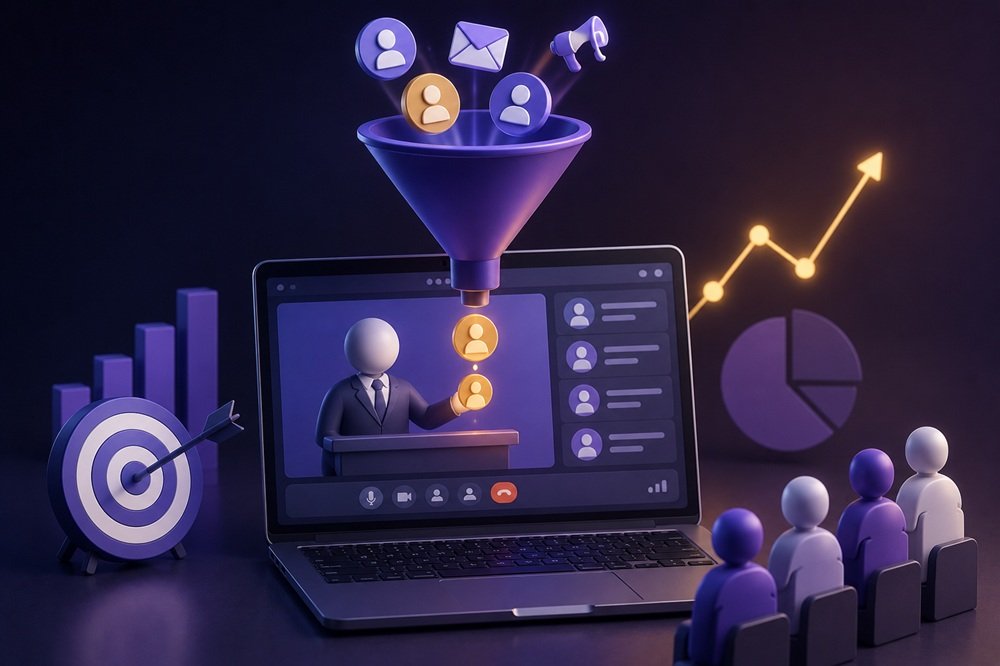
Webinars have been a B2B lead-generation staple for years, and despite predictions of fatigue, they remain effective in 2026 — when done well. The webinar lead-gen playbook has evolved, though, and approaches that worked five years ago underperform now. This article explains what makes webinars work as a lead channel today and how to run them effectively.
Why webinars still work — and what’s changed
Webinars work as a lead-generation channel because they offer genuine value in exchange for registration, attract prospects with real topical interest, and create an engagement opportunity deeper than a content download. A registrant gives you their information and their time, signaling more intent than many other lead types.
What’s changed by 2026 is the bar. Webinar fatigue is real — professional audiences have attended countless mediocre webinars and now filter ruthlessly. The thinly disguised sales pitch, the generic panel, the content that could have been an email — these no longer attract or hold an audience. The webinars that work now clear a higher bar: genuinely valuable content, respected speakers, formats that respect attendees’ time, and topics that address real problems rather than thinly veiling a product demo.
The channel has also bifurcated.
Live webinars offer real-time engagement and urgency but demand attendance at a specific time.
On-demand webinars trade live interaction for convenience, capturing registrations from people who couldn’t attend live. Many programs now run both — live for the engaged core, on-demand for ongoing lead capture from the recording.
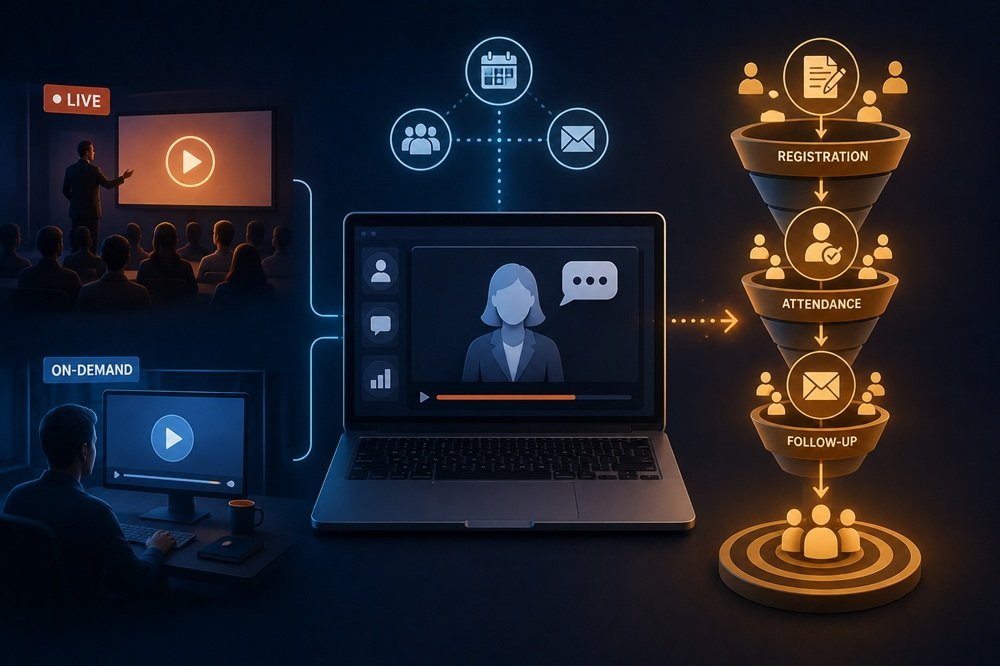
The lead-gen value comes in stages: registration (a lead with topical interest), attendance (higher engagement), and post-webinar follow-up (where registrations and attendees are nurtured toward sales conversations). Each stage is a lead-development opportunity.
Common questions
Do webinars still generate quality leads in 2026?
Yes, when the webinar clears today’s higher bar. A webinar registration signals topical interest and a willingness to invest time, making webinar leads generally higher-intent than passive content downloads. But webinar fatigue means audiences filter ruthlessly — only genuinely valuable webinars with respected speakers and real content attract and hold attendees now. The channel still produces quality leads; it just requires more quality to do so than it did when webinars were novel. Mediocre webinars underperform; excellent ones still work well.
What makes a webinar attract registrations now?
Genuine value addressing a real problem, credible speakers, a compelling and specific topic, and a format that respects attendees’ time. Audiences have learned to spot thinly disguised sales pitches and generic content, and they ignore them. Webinars that attract registrations in 2026 offer something attendees genuinely want to learn — practical insight, expert perspective, real answers — rather than a product demo in disguise. The promotion matters too, but no promotion saves a webinar with weak underlying value. Quality content is the foundation.
Should I run live or on-demand webinars?
Both, ideally. Live webinars create real-time engagement, urgency, and interaction (Q&A, polls) but require attendance at a set time, limiting reach. On-demand webinars trade live interaction for convenience, capturing registrations from people who couldn’t attend live and continuing to generate leads from the recording over time. Running a webinar live for the engaged core, then making it available on-demand for ongoing capture, gets the benefits of both — live engagement plus a durable lead-generating asset. Most effective programs do both.
How do I follow up with webinar leads?
Differentiate by engagement stage. Attendees (who showed up and engaged) warrant more direct follow-up than registrants who didn’t attend (lower engagement, but still topical interest). Follow up promptly while the webinar is fresh, reference the specific content, provide the recording and related resources, and nurture toward a relevant next step. Segment follow-up by behavior — attendees, no-shows, those who stayed for the whole session versus dropped early — since engagement level indicates intent. Tailored follow-up by engagement stage outperforms a single generic message to everyone.
What’s a realistic registration-to-attendance rate?
A meaningful portion of registrants typically don’t attend live — no-show rates are substantial for free webinars, as registration is low-commitment. This is normal and not a failure: registrants who don’t attend still expressed topical interest and remain leads worth nurturing, and on-demand availability lets no-shows engage later. Plan for the gap between registration and attendance, value both registrants and attendees as leads (at different intent levels), and use on-demand access to recover value from no-shows. The no-show rate is expected, not a problem to solve away.
How do webinars compare to other lead-gen channels?
Webinars typically produce higher-intent leads than passive content downloads (registrants invest time, not just a click) but lower volume than broad-reach channels, and they require more effort to produce. They sit in a middle ground — more engagement and intent than a content download, more production effort and lower volume than a simple gated asset. Their strength is the depth of engagement and the higher intent of registrants; their cost is the production effort. They complement higher-volume, lower-intent channels well in a balanced program.
How do I promote a webinar effectively?
Multi-channel promotion to relevant audiences: email to your list and sourced contacts, paid social and LinkedIn to targeted professionals, content syndication, and partner promotion where relevant. Promote far enough ahead to build registrations, with reminders as the date approaches (and reminders reduce no-shows). But remember promotion amplifies the underlying value — strong promotion of a weak webinar still underperforms. Invest in the content first, then promote it across channels to the audiences most likely to find it valuable. Promotion and content quality work together.
How this applies to your business
Invest in genuine webinar quality, because the bar has risen and only valuable webinars work now. Audiences filter ruthlessly against webinar fatigue, ignoring thinly disguised pitches and generic content. The webinars that generate quality leads in 2026 offer real value — practical insight, credible speakers, topics addressing actual problems. Quality content is the foundation; no amount of promotion saves a weak webinar. Treat the content as the investment that determines whether the channel works.
Run webinars both live and on-demand to maximize lead capture. Live sessions create engagement and urgency for the core audience; on-demand availability captures registrations from no-shows and continues generating leads from the recording over time. This combination turns a one-time event into a durable lead-generating asset, recovering value from the substantial portion of registrants who won’t attend live and extending the webinar’s lead-gen life well beyond the event date.
Follow up by engagement stage, since webinar leads span intent levels. Attendees who engaged deeply warrant more direct follow-up than no-show registrants, though both are leads worth nurturing. Prompt, content-referencing follow-up segmented by behavior — attendees, no-shows, full-session versus early-drop — outperforms a single generic message. The engagement data a webinar produces is valuable intelligence for tailoring follow-up to each lead’s demonstrated intent.
Iscope Digital’s
Online Lead Generation service includes webinar promotion and registration capture as part of multi-channel lead generation, with engagement-based follow-up. For nurturing webinar leads through qualification, see
MQL vs SQL, and for email follow-up that lands,
B2B nurture sequences: how long, how many emails, how often?