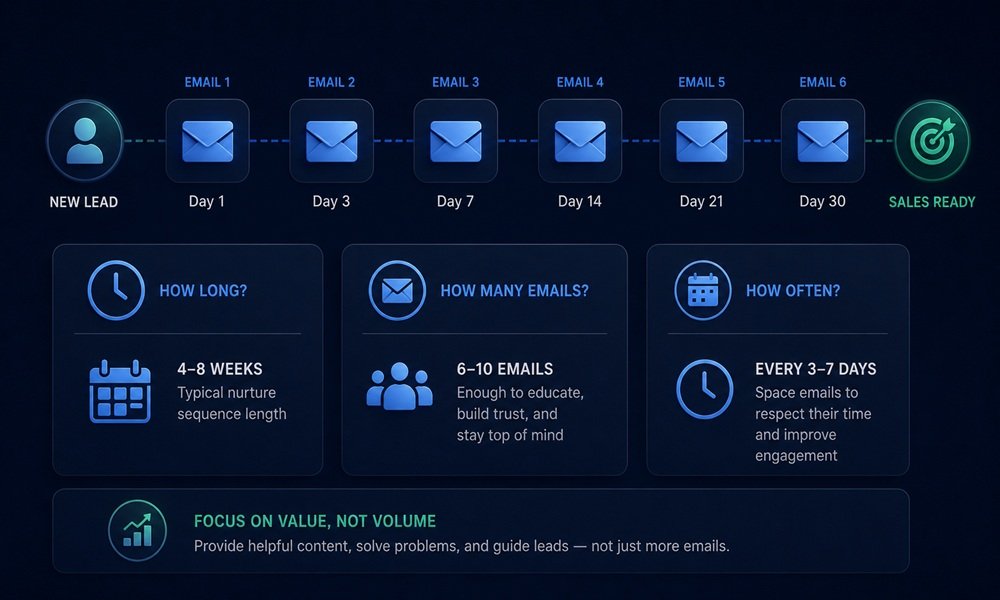
A nurture sequence is supposed to move a lead from initial interest toward sales readiness — but get the length, volume, or cadence wrong and you either lose the lead to silence or annoy them into unsubscribing. The “right” answers aren’t universal; they depend on your sales cycle and audience. This article explains how to think about nurture-sequence length, email count, and frequency.
What a nurture sequence is for
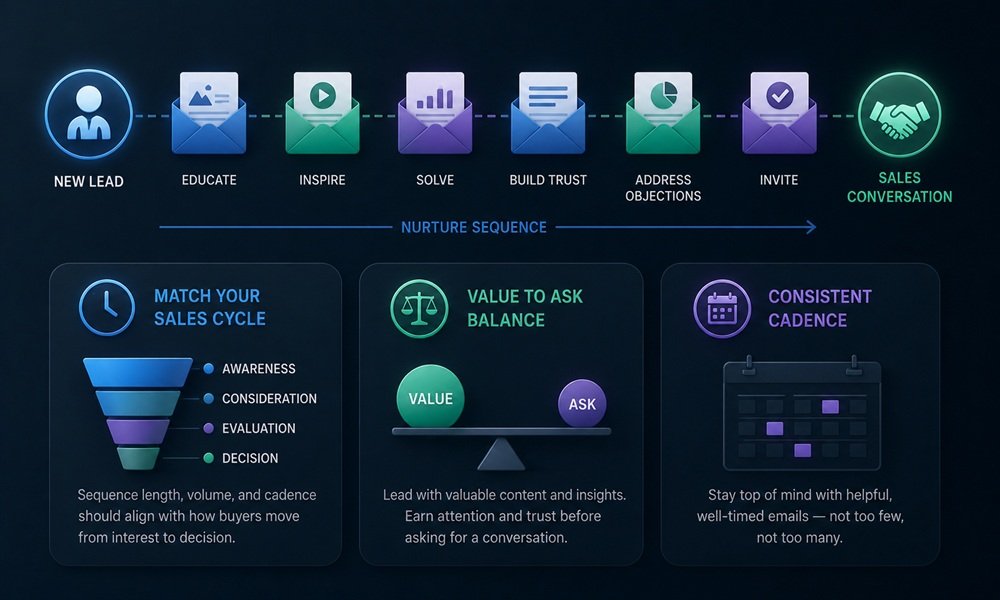
A B2B nurture sequence is a planned series of emails designed to develop a lead’s interest and readiness over time — providing value, building trust, and gradually moving the lead toward a sales conversation. It exists because most B2B leads aren’t ready to buy when first captured; they need development before a sales handoff makes sense.
The three variables — length (how long the sequence runs), volume (how many emails), and cadence (how often) — should all be derived from one anchor: your sales cycle and how buyers in your market actually make decisions. A sequence dramatically shorter than your sales cycle gives up on leads before they’re ready; one that drags on too long with too many emails exhausts goodwill. The sequence should roughly match the rhythm of how your buyers move from interest to decision.
The other principle is value-to-ask balance. A nurture sequence that’s all asks (“book a demo,” “talk to sales”) burns out fast; one that delivers genuine value (useful content, insight, relevant resources) earns continued attention and the right to occasionally ask. The cadence and content should feel helpful, not relentless.
So the answers to “how long, how many, how often” come from matching the sequence to your sales cycle and maintaining a value-heavy balance — not from a universal formula.
Common questions
How long should a B2B nurture sequence be?
Roughly matched to your sales cycle and buying rhythm. If buyers in your market typically take months to move from interest to decision, the sequence should sustain engagement over that period rather than rushing to a sales ask in two weeks. A sequence much shorter than your sales cycle gives up on leads before they’re ready; one much longer risks exhausting goodwill. Anchor the length to how your actual buyers make decisions — longer for considered, high-value B2B; shorter for faster-cycle products.
How many emails should a nurture sequence include?
Enough to sustain engagement across the sequence length without overwhelming, which depends on the duration and cadence rather than a fixed number. A longer sequence naturally includes more emails at a sustainable cadence; a shorter one includes fewer. The principle is sufficient touches to stay present and provide value over the period, spaced so they’re welcome rather than relentless. Rather than targeting a specific email count, derive it from the length and a sustainable cadence — the number that keeps you helpfully present without becoming an annoyance.
How often should nurture emails be sent?
At a cadence that keeps you present without becoming intrusive — frequent enough to maintain awareness, spaced enough to remain welcome. The right frequency depends on your audience and content value: high-value, relevant content can be sent somewhat more often than thin content before it annoys. Watch engagement and unsubscribe signals — rising unsubscribes or falling engagement suggest you’re sending too often or your content isn’t earning the frequency. The cadence should feel helpful to the recipient, not relentless. Adjust based on how your audience responds.
What’s the right balance of value versus sales asks?
Heavily weighted toward value. A nurture sequence that’s mostly sales asks (“book a demo,” “talk to us”) exhausts goodwill quickly, while one that delivers genuine value — useful content, relevant insight, helpful resources — earns continued attention and the right to occasionally ask. The asks should be earned by the value around them. A common pattern is to lead with value and introduce asks gradually as the relationship develops, rather than asking hard from the start. Value-heavy sequences sustain engagement; ask-heavy ones burn out.
Should the sequence be the same for all leads?
No — segmentation improves nurture effectiveness significantly. Leads differ in fit, interest, source, and stage, and a one-size sequence serves none of them well. Segmenting nurture by relevant factors — industry, role, the content that captured them, their engagement level — lets you deliver more relevant content that resonates more and converts better. At minimum, differentiate by major segments; more sophisticated programs branch sequences based on engagement and behavior. Relevance drives nurture success, and relevance requires segmentation rather than a single universal sequence.
How do I know if my nurture sequence is working?
Track progression and engagement through the sequence: are leads advancing toward qualification (MQL to SQL), engaging with the emails (clicks, conversions — not opens, which are unreliable), and ultimately converting to pipeline? Watch for drop-off points where leads disengage, and unsubscribe rates signaling the sequence is too frequent or not valuable enough. A working sequence shows leads progressing and engaging; a failing one shows disengagement, drop-off, and unsubscribes. Measuring progression through the funnel, not just email metrics, tells you whether the nurture is doing its job.
What should trigger moving a lead from nurture to sales?
Signals of sales readiness — the lead meeting your SQL criteria through demonstrated engagement and fit. Behaviors like engaging repeatedly with high-intent content, visiting key pages (pricing, product), or directly expressing interest indicate a lead has developed enough for sales involvement. The nurture sequence’s job is to develop leads to this point and detect when they reach it. Defining the readiness signals that trigger a sales handoff — and acting on them promptly — ensures leads move to sales when ready rather than continuing to nurture leads who are ready to talk or giving up on those who aren’t yet.
How this applies to your business
Anchor your nurture sequence’s length, volume, and cadence to your sales cycle and buying rhythm, not to a universal formula. If your buyers take months to decide, build a sequence that sustains engagement over that period; if they decide faster, compress accordingly. Matching the sequence to how your actual buyers move from interest to decision prevents both giving up too early and dragging on too long. The right answers come from your sales cycle, so start there.
Weight the sequence heavily toward value, earning the right to ask. Nurture sequences that deliver genuine value — useful content, relevant insight — sustain engagement and earn occasional sales asks, while ask-heavy sequences burn out goodwill fast. Lead with value, introduce asks gradually, and let the helpful content around them justify the asks. The recipient should experience the sequence as helpful, not relentless. This balance is what keeps leads engaged through a sequence long enough to develop them.
Segment your nurture and measure progression, not just email metrics. Segmenting by industry, role, source, and engagement delivers the relevance that makes nurture work, while measuring progression through qualification (toward SQL and pipeline) tells you whether the sequence is actually developing leads. Watch for disengagement and unsubscribes as signals to adjust frequency or content. A nurture program built on relevant segmentation and measured on funnel progression outperforms a generic sequence judged by unreliable open rates.
Iscope Digital’s
Email Marketing service builds segmented, value-driven nurture sequences matched to your sales cycle, measured on progression and pipeline. For the qualification stages nurture moves leads through, see
MQL vs SQL, and for the reliable metrics to judge nurture by,
The death of the open rate: metrics that actually matter in 2026.