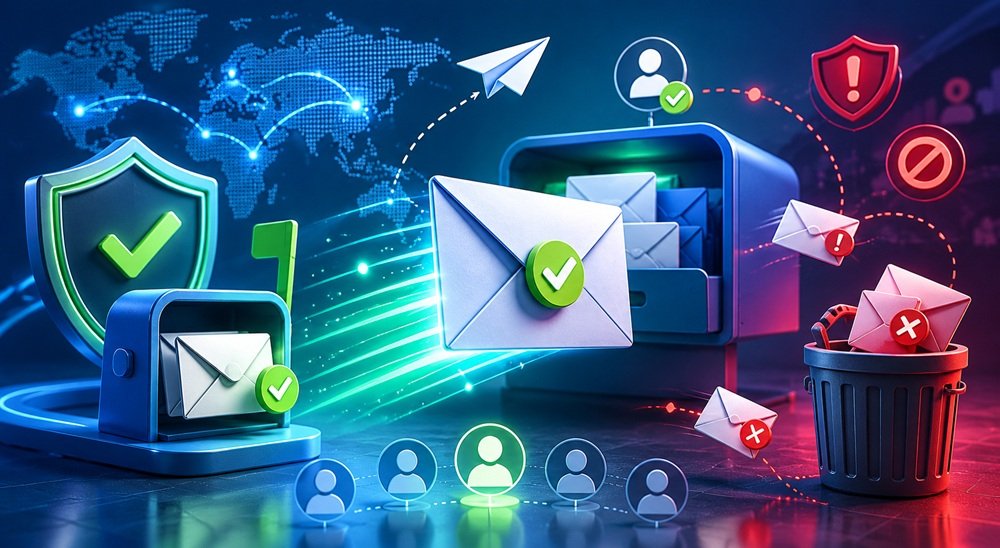
Marketers obsess over open rates and click rates, but there’s a more fundamental metric that determines whether those even matter: deliverability. If your email doesn’t reach the inbox, nothing downstream counts. This article explains what email deliverability actually is, why it’s the foundation of email marketing, and why it matters more than the engagement metrics that get more attention.
What deliverability actually means
Email deliverability is whether your email actually reaches recipients’ inboxes — not just whether it’s accepted by their mail server, but whether it lands in the inbox rather than the spam folder or being blocked entirely. It’s the difference between an email that was “delivered” in a technical sense and one that actually appears where the recipient will see it.
There’s a critical distinction between
delivery and
deliverability. Delivery means the receiving mail server accepted your message (it didn’t bounce). Deliverability means it reached the inbox. An email can be “delivered” (accepted by the server) but land in spam — technically delivered, but practically invisible. Deliverability is about inbox placement, the outcome that actually matters.
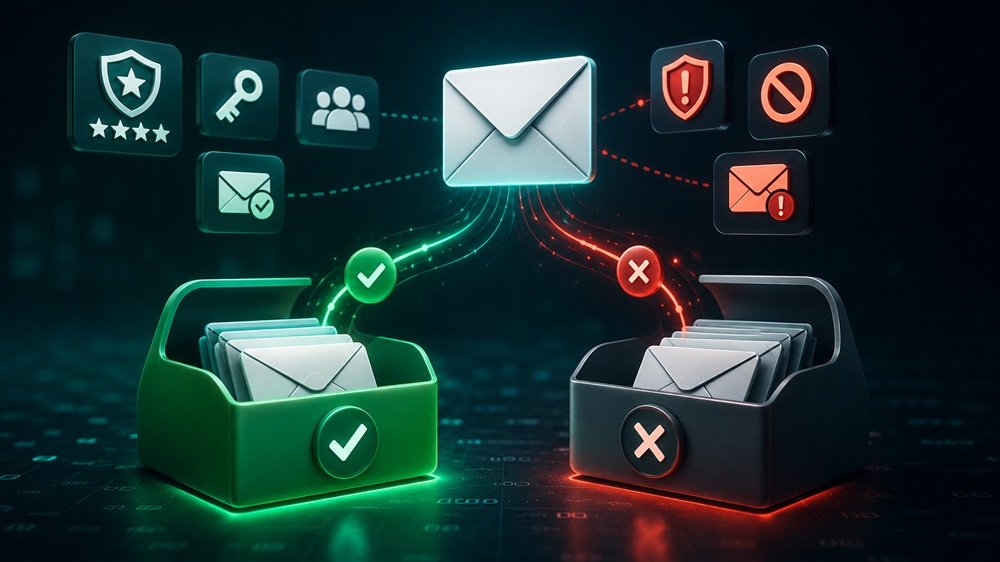
Deliverability is determined by many factors: your sender reputation (how mailbox providers judge your sending history), authentication (SPF, DKIM, DMARC proving you are who you claim), list quality (sending to valid, engaged addresses), content (avoiding spam triggers), and engagement (recipients opening and interacting, signaling wanted mail). These factors compound — strong across all of them means good inbox placement; weak in several means spam-folder relegation.
The reason deliverability is foundational: every other email metric depends on it. Open rate, click rate, conversion — all are measured against emails that reached the inbox. If deliverability is poor and your email lands in spam, your open and click rates are measuring the small fraction that got through, and improving them is futile while the underlying inbox-placement problem persists.
Common questions
What’s the difference between delivery and deliverability?
Delivery means the receiving server accepted your email (it didn’t bounce). Deliverability means it reached the inbox specifically, rather than the spam folder or being filtered out. An email can be “delivered” — accepted by the server — but land in spam, making it technically delivered but practically invisible. Delivery is a low bar (the server took it); deliverability is the meaningful one (it reached where the recipient will see it). Many “delivered” emails never reach the inbox, which is why deliverability, not delivery, is the metric that matters.
Why does deliverability matter more than open rates?
Because deliverability determines whether open rates even matter. Open rate measures engagement among emails that reached the inbox — if deliverability is poor and most of your email lands in spam, your open rate reflects only the fraction that got through, and improving it is futile while the inbox-placement problem persists. Deliverability is foundational: every downstream metric depends on it. You can’t out-optimize subject lines if your email isn’t reaching inboxes. Fix deliverability first; engagement metrics become meaningful only once email actually arrives.
What determines email deliverability?
Several compounding factors: sender reputation (how mailbox providers judge your sending history based on past behavior), authentication (SPF, DKIM, DMARC proving your identity), list quality (sending to valid, engaged addresses rather than dead or unengaged ones), content (avoiding spam-trigger characteristics), and recipient engagement (opens and interactions signaling wanted mail). These factors reinforce each other — strong across all means good inbox placement; weakness in several causes spam relegation. Deliverability isn’t one switch but the cumulative result of reputation, authentication, list quality, content, and engagement.
How do I know if I have a deliverability problem?
Signs include declining open rates (especially a sudden drop), low engagement despite good content, recipients reporting your emails land in spam, rising bounce rates, and inbox-placement testing showing spam-folder delivery. Inbox-placement testing tools can directly reveal where your email lands across major providers. If your engagement metrics are weak or declining and your content hasn’t changed, suspect deliverability — the email may be reaching spam folders rather than inboxes, making the engagement problem actually a placement problem.
Can good content overcome poor deliverability?
No — this is the key insight. The best subject line and most compelling content are worthless if the email lands in spam where no one sees it. Content optimization operates on emails that reach the inbox; it can’t fix the underlying placement problem. Marketers who pour effort into subject lines and creative while ignoring deliverability are optimizing the wrong layer. Deliverability must be solid first; only then does content optimization meaningfully improve results. You can’t out-write a spam-folder placement.
How does list quality affect deliverability?
Heavily. Sending to invalid addresses (bounces) and unengaged recipients signals to mailbox providers that you’re sending unwanted or poorly-targeted mail, damaging your sender reputation and pushing more of your email toward spam folders. Conversely, sending to valid, engaged recipients builds reputation and improves inbox placement. This is why list hygiene and engagement matter so much — they’re not just about reaching good contacts, they directly protect the sender reputation that determines whether all your email reaches inboxes. Poor list quality drags down deliverability for your entire program.
What’s the relationship between deliverability and sender reputation?
Sender reputation is the central driver of deliverability. Mailbox providers judge your sending behavior over time — bounce rates, complaint rates, engagement, authentication, sending patterns — and build a reputation score that determines how they treat your mail. Good reputation means inbox placement; poor reputation means spam relegation or blocking. Nearly everything that affects deliverability does so through its effect on reputation. Protecting sender reputation — through list quality, authentication, engagement, and consistent good sending behavior — is essentially how you protect deliverability.
How this applies to your business
Treat deliverability as the foundation of your email program, prioritized above engagement optimization. Before optimizing subject lines and creative, ensure your email is actually reaching inboxes — because content optimization is futile if your email lands in spam. Diagnose deliverability first (inbox-placement testing, reputation monitoring, bounce and engagement trends), fix any placement problems, and only then invest heavily in engagement optimization. The order matters: deliverability enables everything downstream.
Protect sender reputation as the core of deliverability, through the factors that drive it: authentication (SPF, DKIM, DMARC), list quality (sending to valid, engaged contacts), hygiene (removing bounces and unengaged recipients), and consistent good sending behavior. Nearly everything affecting deliverability works through reputation, so the discipline of protecting reputation — clean lists, proper authentication, engagement focus — is the discipline of maintaining deliverability. Guard it carefully; reputation damage suppresses all your email.
Reframe your metrics around inbox placement. If engagement metrics are weak or declining without a content cause, suspect a deliverability problem rather than a content one — the email may be reaching spam folders, making an apparent engagement issue actually a placement issue. Monitoring inbox placement directly, alongside engagement, gives you the true picture and prevents the common mistake of optimizing content when the real problem is that the email isn’t reaching the inbox at all.
Iscope Digital’s
Email Marketing service engineers deliverability as the foundation — authentication, list quality, reputation monitoring, and inbox-placement testing — before optimizing engagement. For the authentication that underpins deliverability, see
SPF, DKIM, DMARC explained for marketers, and for the metrics that matter once email reaches the inbox,
The death of the open rate: metrics that actually matter in 2026.