When you email a purchased B2B list, some messages will bounce — the question is how many is acceptable. Bounce rate is one of the clearest signals of data quality and a direct threat to your sender reputation. Here’s what counts as a good bounce rate, why it matters beyond a single campaign, and how to keep it low.
What Email Bounce Rate Means
Bounce rate is the percentage of emails that fail to deliver. It’s a leading indicator of contact-data quality: a clean, current list bounces little, while a stale or guessed one bounces heavily. Because mailbox providers watch bounce rates closely, it’s also a reputation issue, not just a delivery one.
Hard Bounces vs. Soft Bounces
A
hard bounce is a permanent failure — the address doesn’t exist or the domain is invalid — and it directly reflects bad data. A
soft bounce is temporary, like a full mailbox or a server issue, and may resolve on its own. Hard bounces are the ones that signal data quality problems and harm your reputation most.
What Counts as a Good Bounce Rate
As a general rule, lower is better, and a well-maintained list should keep hard bounces in the low single digits. Rates climbing into higher percentages suggest stale or poorly verified data and put your sender reputation at risk. Rather than fixating on one universal number, treat a rising bounce rate as a warning that your data needs attention.
Why Bounce Rate Matters Beyond One Campaign
The damage from bounces compounds. Mailbox providers interpret high bounce rates as a sign of spam-like behavior, which lowers your sender reputation and pushes even your
good emails toward spam folders. A single campaign sent to a bad list can quietly hurt deliverability for everything you send afterward.
How Data Quality Drives Bounce Rates
Bounce rates trace directly back to how well a vendor verifies and refreshes data. Continuously verified data keeps bounces low; static, rarely-updated data lets them climb as addresses decay. This is why refresh frequency and verification quality are worth scrutinizing before you buy — they predict your bounce rate.
How to Reduce Bounces on Purchased Data
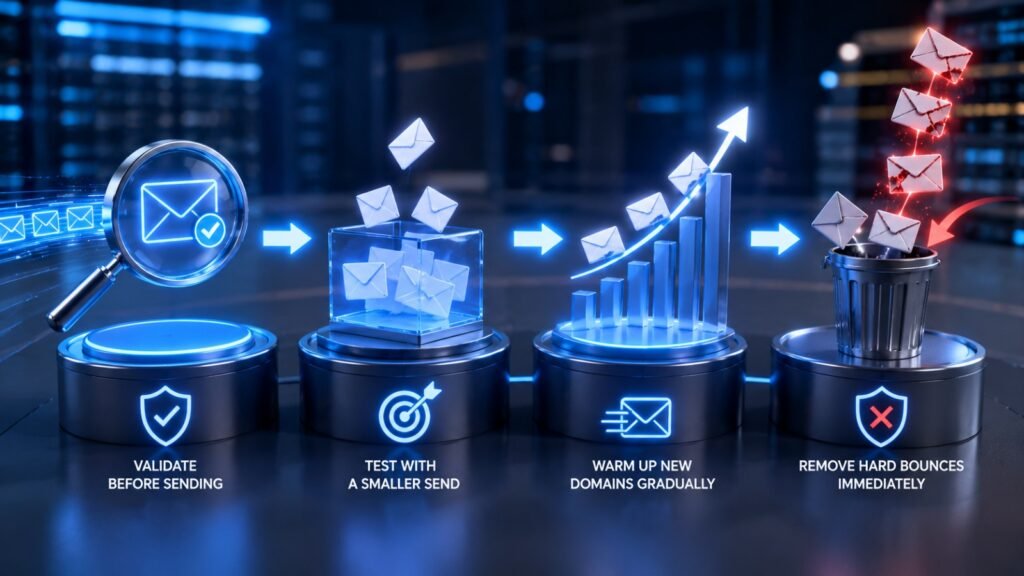
You can protect yourself with a few habits: validate emails right before sending, start with a smaller send to test the list, warm up new sending domains gradually, and remove hard bounces immediately so you don’t email them again. These steps keep both your bounce rate and your reputation healthy.

Key Takeaways
Bounce rate is a direct readout of data quality and a real risk to your sender reputation. Aim to keep hard bounces low, treat any rise as a data-quality warning, and protect yourself by validating before sending and removing bounces promptly. Good data is the root cause of good bounce rates.
Frequently Asked Questions
What is a good email bounce rate for a purchased list?
Lower is better; a well-maintained list should keep hard bounces in the low single digits. A rising rate signals stale data and threatens your sender reputation.
What’s the difference between a hard and soft bounce?
A hard bounce is a permanent failure, like a non-existent address, and reflects bad data. A soft bounce is temporary, like a full mailbox, and may resolve on its own.
Why does bounce rate matter so much?
High bounce rates lower your sender reputation, which pushes even your good emails toward spam folders. The damage extends well beyond the single campaign.
How can I reduce bounces on bought data?
Validate emails right before sending, test with a small initial send, warm up new domains gradually, and remove hard bounces immediately.
Can a high bounce rate indicate problems with the data provider?
Yes. Consistently high hard-bounce rates often suggest that the provider is not updating or verifying records frequently enough. Reviewing bounce performance is one of the fastest ways to assess data quality.
Should I test a purchased list before launching a large campaign?
Yes. Sending to a small sample first helps identify potential data-quality issues, measure bounce rates, and protect your sender reputation before committing to a larger outreach effort.
How does email verification improve deliverability?
Email verification tools identify invalid, inactive, or risky addresses before you send. Removing these contacts can reduce bounce rates and improve the likelihood that messages reach inboxes.
What role does data freshness play in bounce rates?
Data freshness is one of the biggest factors affecting bounce rates. As people change jobs and companies update their email systems, older records become less reliable and more likely to bounce.
Can low bounce rates guarantee strong campaign performance?
No. Low bounce rates indicate good data quality, but campaign success also depends on targeting, messaging, offer relevance, and follow-up strategy. Deliverability is only one part of the equation.
What bounce rate should I expect from a high-quality B2B data provider?
While no provider can guarantee zero bounces, reputable B2B data vendors typically aim to keep hard-bounce rates in the low single digits through regular verification and data refresh processes. If your campaigns consistently exceed that range, it may be worth reviewing the provider’s data quality standards, update frequency, and verification methods before scaling your outreach.