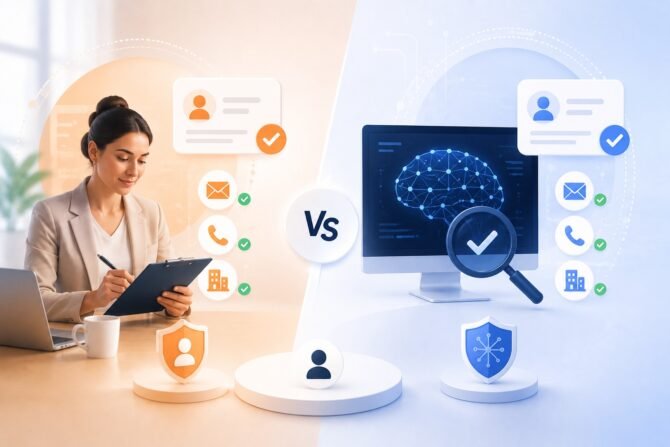
When vendors talk about “verified” data, they don’t all mean the same thing. Some rely on software, some on people, and the best use both. The distinction affects accuracy, cost, and scale — so it’s worth understanding before you buy. Here’s how human and algorithmic verification compare.
The Two Approaches to Verification
Verification falls into two broad camps: algorithmic, where software checks data automatically, and human, where a person confirms it. They aren’t rivals so much as tools suited to different jobs, and most quality databases blend them. Knowing which a vendor leans on tells you a lot about their data’s strengths and weaknesses.
How Algorithmic Verification Works
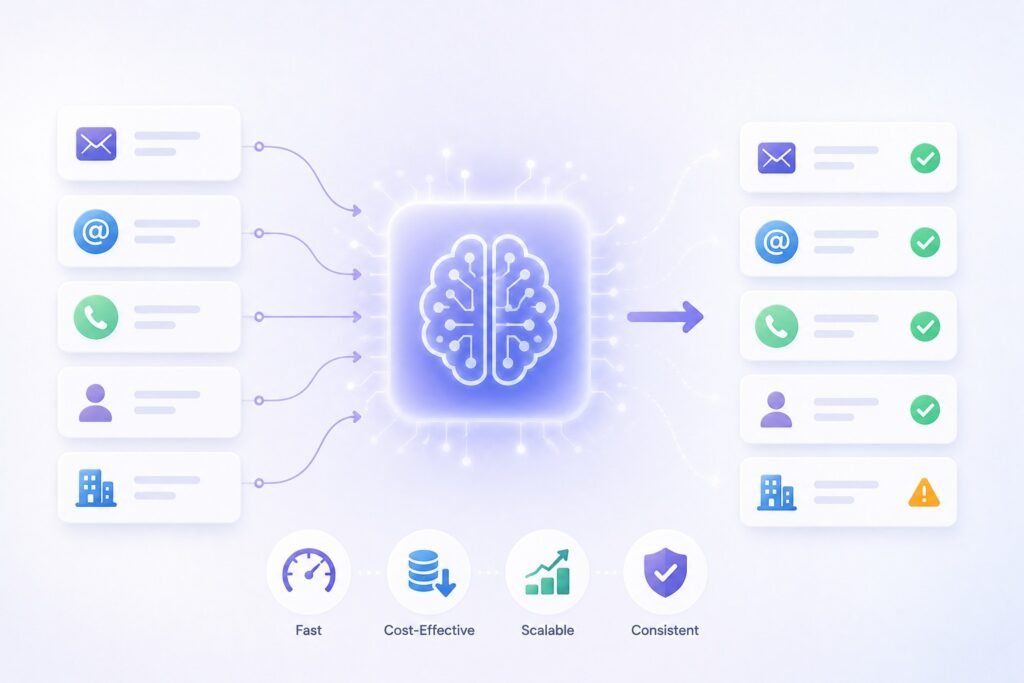
Algorithmic verification uses automated systems to check data at scale — validating that an email’s domain and mailbox look legitimate, that formats are correct, and that records are internally consistent. It’s fast, inexpensive per record, and capable of processing enormous volumes, which makes it the workhorse for keeping large databases current.
How Human Verification Works
Human verification involves a researcher actually confirming a data point — checking that a person holds a given role at a company, for instance. It’s slow and costly compared with automation, but it catches nuances software misses and is especially valuable for high-stakes fields like senior-contact direct dials.
Strengths and Weaknesses of Each
Algorithmic verification wins on speed, cost, and scale but can miss context and can’t truly confirm that a person still holds a role. Human verification wins on accuracy and judgment but doesn’t scale cheaply and can’t keep an entire large database current on its own. Each covers the other’s blind spot.
Where Each Approach Fits Best
Algorithmic verification fits broad, high-volume checks — keeping millions of email records valid. Human verification fits targeted, high-value work — confirming key contacts, senior roles, or the direct dials you’ll spend real effort pursuing. Matching the method to the stakes is how providers get both scale and reliability.

What the Best Vendors Do
The strongest providers don’t choose one — they layer them. Automation handles breadth and frequency, while human verification is applied where accuracy matters most. When evaluating a vendor, the ideal answer to “how do you verify?” is a thoughtful combination of both, applied deliberately rather than relying on one alone.
Key Takeaways
Algorithmic verification delivers speed and scale; human verification delivers accuracy and judgment. Neither is universally “better” — the best databases combine them, using automation for breadth and human checks for high-value fields. When buying, look for a vendor that blends both rather than leaning entirely on one.
Frequently Asked Questions
Is human-verified data better than algorithm-verified?
For high-value fields like senior direct dials, human verification is more reliable. For broad, high-volume checks, algorithms are faster and more practical. The best databases use both.
What is algorithmic verification?
Automated software checks that validate things like email domains and formats at scale. It’s fast and inexpensive but can miss context a person would catch.
Why is human-verified data more expensive?
Because it requires a person to confirm each data point, which doesn’t scale as cheaply as automation. That cost is why it’s reserved for high-value fields.
What should I look for in a vendor’s verification?
A deliberate combination of automated and human verification — automation for breadth and frequency, human checks where accuracy matters most.
Which data fields benefit most from human verification?
Direct dials, executive contact information, reporting structures, and senior leadership details often benefit the most from human verification because these fields are difficult to validate accurately through automation alone.
Can automated verification keep up with data changes faster than human verification?
Yes. Automated systems can scan and validate large volumes of records continuously, making them well suited for detecting changes quickly. Human verification is typically used to confirm critical records after automated systems identify potential updates.
How can I tell whether a vendor relies too heavily on automation?
Ask how they verify high-value contact fields and how exceptions are handled. Vendors that depend entirely on automation may struggle to maintain accuracy for complex or difficult-to-verify records.
Does human verification eliminate all data errors?
No. Even manually verified data can become outdated shortly after it is confirmed because people change jobs, companies reorganize, and contact information changes. Verification improves accuracy but cannot prevent future data decay.
Should startups and small businesses pay extra for human-verified data?
It depends on the importance of accuracy to the sales process. If outreach targets a small number of high-value prospects, human-verified data may be worthwhile. For high-volume prospecting, a combination of automated verification and selective human review is often more cost-effective.
How do hybrid verification models improve data quality?
Hybrid models combine automated systems for speed and scale with human verification for accuracy on critical fields. This approach helps providers maintain broad database coverage while improving confidence in the records that matter most to buyers.