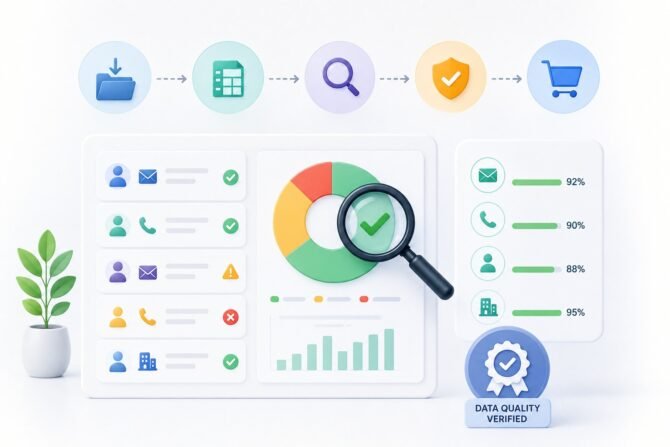
The single best protection against bad data is also the simplest: test before you buy. A sample audit takes a little time but reveals far more than any vendor’s marketing claim. Here’s exactly how to run one, what to measure, and the warning signs that should stop a purchase.
Why You Should Always Test First
Vendor accuracy claims are hard to compare and easy to inflate, so the only reliable way to know what you’re buying is to inspect a real sample. A short test can save you from a costly subscription to data that bounces, misses your target, or arrives half-empty. Testing turns a leap of faith into an informed decision.
What a Sample Audit Is
A sample audit is a small-scale quality check: you obtain a representative set of records and independently verify how accurate and complete they are. It’s a stand-in for the full dataset, so the key is that the sample genuinely reflects what you’d actually buy — not a hand-picked best-case selection.
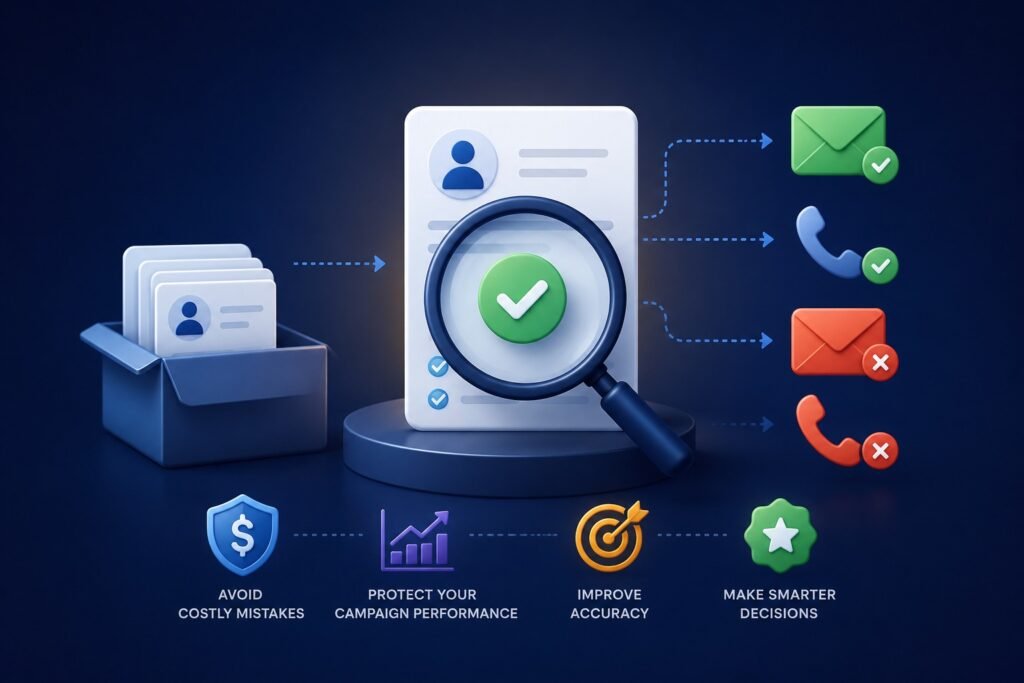
How to Request a Representative Sample
Ask the vendor for a sample drawn from your actual target segment — your industry, region, and seniority — rather than a generic demo file. Specify the criteria so the sample matches what you intend to purchase. A vendor confident in their data will provide one; reluctance here is itself informative.
Step-by-Step: Auditing 100 Records
With a sample of around 50–100 records in hand, work through it methodically:
- Check whether each record has the fields you actually need.
- Validate the emails with a verification tool.
- Spot-check job titles and companies against current public information.
- Test a handful of phone numbers if direct dials matter to you.
Tally the results so you have concrete percentages, not impressions.
What to Measure
Focus on three things: accuracy (how many records are correct and current), fill rate (how many have your priority fields populated), and deliverability (how many emails validate as deliverable). Together these tell you whether the data will actually perform — far more usefully than a single headline accuracy figure.
Red Flags to Watch For
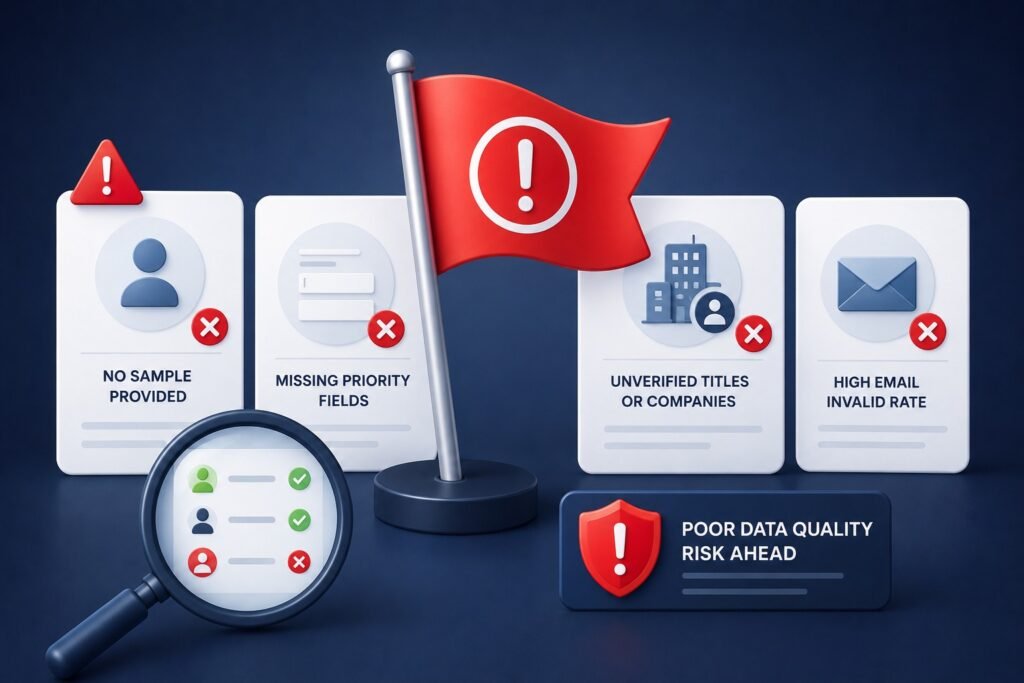
Stop and reconsider if the vendor won’t provide a representative sample, if many priority fields are blank, if titles and companies don’t check out, or if emails fail validation at a high rate. Any of these in a sample tends to be worse across the full dataset. A clean sample, by contrast, is a strong buying signal.
Key Takeaways
Always test before you buy. Request a sample drawn from your real target, audit 50–100 records for accuracy, fill rate, and deliverability, and treat a vendor’s reluctance to provide one as a red flag. A short audit is the cheapest insurance against an expensive data mistake.
Frequently Asked Questions
How do I test B2B data before buying?
Request a representative sample from your actual target segment and independently check 50–100 records for accuracy, fill rate, and email deliverability.
How many records should I audit?
Around 50–100 is usually enough to reveal real-world quality, provided the sample genuinely reflects what you’d buy rather than a best-case selection.
What should I measure in a sample audit?
Accuracy of records, fill rate on your priority fields, and email deliverability. Together they predict how the data will actually perform.
What are the red flags in a data sample?
Refusal to provide a representative sample, many blank priority fields, titles or companies that don’t check out, and a high rate of failed email validation.
Should the sample come from my exact target market?
Yes. A sample is only meaningful if it reflects the industries, company sizes, job titles, and regions you plan to target. A database that performs well in one segment may perform very differently in another.
Can I compare multiple vendors using the same sample criteria?
Absolutely. Using identical filters and evaluation criteria across vendors is one of the best ways to compare data quality, coverage, fill rates, and overall fit for your business.
What fill rates should I look for in a sample?
Focus on the fields that matter most to your outreach strategy. For example, if email outreach is your primary channel, prioritize email coverage and accuracy over less important fields you may never use.
Should I validate sample emails independently?
Yes. Running your own email validation checks provides an objective assessment of deliverability and helps verify the vendor’s claims about data quality.
How can I tell if a vendor is showing me a best-case sample?
Ask for a random sample based on your target criteria rather than a curated list. If the vendor is unwilling to provide representative records, the sample may not accurately reflect the quality of the full database.
What should I do if the sample quality is lower than expected?
Discuss the results with the vendor, ask whether quality varies by segment, and compare alternative providers. A disappointing sample is often a warning sign that the full database may not meet your needs.