“Why pay when there are free B2B data tools?” is a fair question and the answer isn’t a flat “free is bad.” Free tools have real uses and real limits, and paid databases earn their cost in specific ways. Understanding the trade-offs helps you decide which fits your situation. Here’s what you really get with each.
The Appeal of Free Tools
Free B2B data tools are attractive for obvious reasons: no cost, no commitment, and a quick way to start. For a solo founder, a tight budget, or simply testing whether outbound works at all, free access can be a reasonable starting point. The appeal is genuine the question is what you give up in return.
What Free Databases Typically Offer
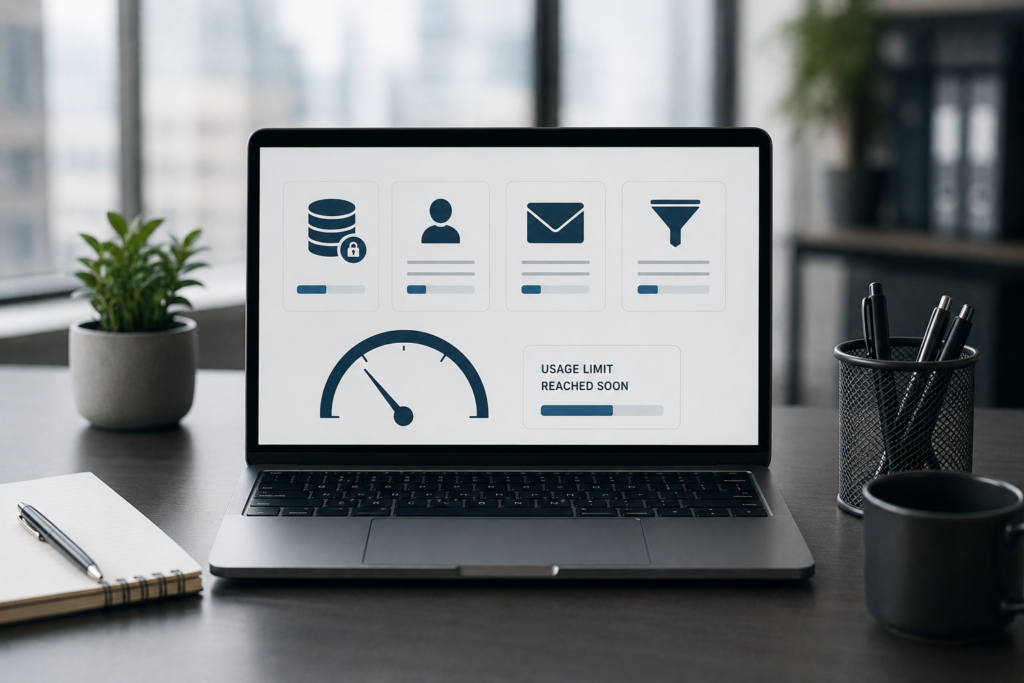
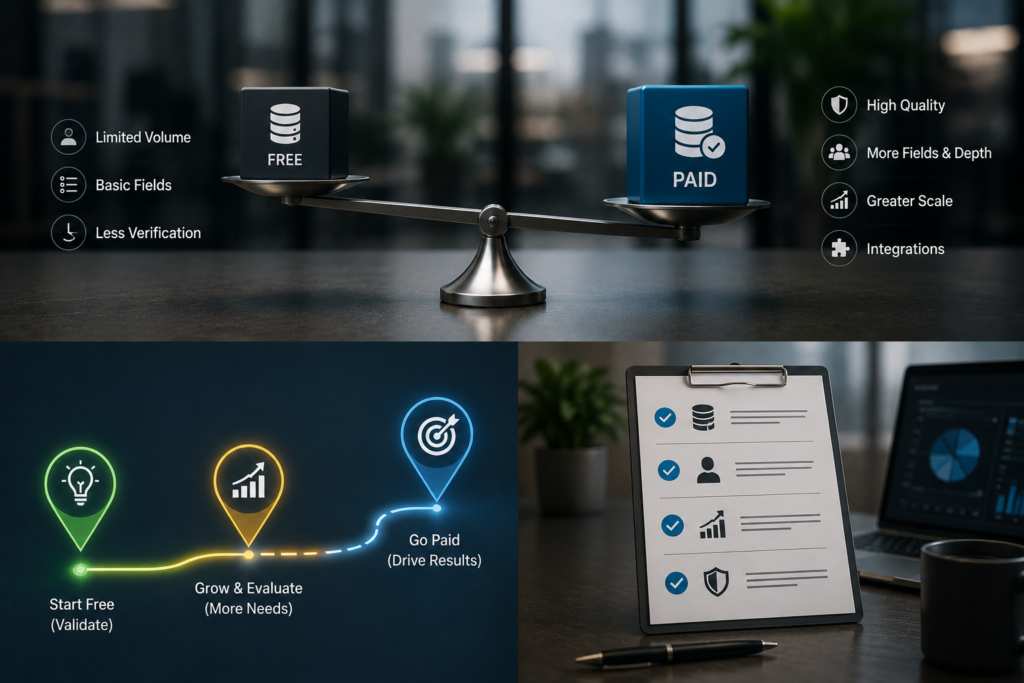
Free tiers usually provide limited volume, basic fields, and less frequent updating. You might get a capped number of lookups per month, mostly email-level data, and fewer filters. They can be enough to build a small list or test a niche, but they rarely support sustained, high-volume prospecting or deep targeting.
The Limits of Free Data
Free data’s limits tend to bite as you scale: volume caps, thinner coverage, fewer premium fields like direct dials, and often less rigorous verification, which can mean higher bounce rates. There may also be less clarity on sourcing and compliance. These limits are the implicit price of “free.”
What Paid Databases Add
Paid databases generally add what free ones lack: higher volume, continuous refresh and better verification, richer fields and filters, intent and technographic data, integrations, and clearer sourcing and support. You’re paying for quality, depth, scale, and reliability the things that matter most once data becomes central to your pipeline.
When Free Makes Sense
Free is a reasonable choice when your needs are small or occasional, when you’re validating whether outbound works before investing, or when budget is genuinely the binding constraint. Used realistically for limited volume and with its quality limits in mind a free tool can deliver real value at the right stage.
When Paid Is Worth It
Paid becomes worth it when data quality and scale start driving real revenue when bounce rates from free data hurt, when you need volume free tiers can’t supply, or when premium fields and integrations would materially improve results. At that point, the cost of paid data is usually small against the value of better, more reliable pipeline.
Key Takeaways
Free B2B databases offer limited volume, basic fields, and less verification useful for small needs or testing, but limiting at scale. Paid databases add quality, depth, scale, and reliability that matter once data drives revenue. Choose based on your stage and needs: start free if validating, move to paid when quality and volume start to pay for themselves.
Frequently Asked Questions
Are free B2B databases worth it?
For small or occasional needs and for testing whether outbound works, yes. But free tools have real limits in volume, coverage, fields, and verification.
What do free databases typically offer?
Limited volume, basic fields (often email-level), fewer filters, and less frequent updating enough for small lists but not sustained, high-volume prospecting.
What are the limits of free data?
Volume caps, thinner coverage, fewer premium fields like direct dials, often weaker verification (higher bounces), and sometimes less clarity on sourcing.
What do paid databases add?
Higher volume, continuous refresh and better verification, richer fields and filters, intent and technographic data, integrations, and clearer sourcing and support.
When should I use a free tool?
When needs are small or occasional, when validating outbound before investing, or when budget is the binding constraint — used with its limits in mind.
When is paid data worth the cost?
When quality and scale drive revenue when free-data bounces hurt, when you need more volume, or when premium fields and integrations would improve results.
Is free data less compliant?
Not inherently, but free tools sometimes offer less clarity on sourcing and consent. Vet any source, free or paid, for transparent, lawful sourcing.
Does free data bounce more?
It can, because verification is often less rigorous on free tiers. Higher bounce rates are a common hidden cost of free data.
Can I start free and upgrade later?
Yes, and that’s a sensible path validate with a free tool, then move to paid when volume and quality needs grow. Check how easy migration is.
Is paid always better than free?
Not for every situation. Paid is better when you need quality and scale; for minimal needs, a free tool used realistically can be the right call.