Every business accumulates dormant contacts — people who once engaged but have gone quiet, leads that were never worked, customers who drifted away. A list reactivation campaign attempts to re-engage them rather than letting that accumulated audience go to waste. Done well, reactivation recovers real pipeline; done poorly, it damages deliverability. This article explains what works, what to expect, and what to avoid.
What list reactivation is
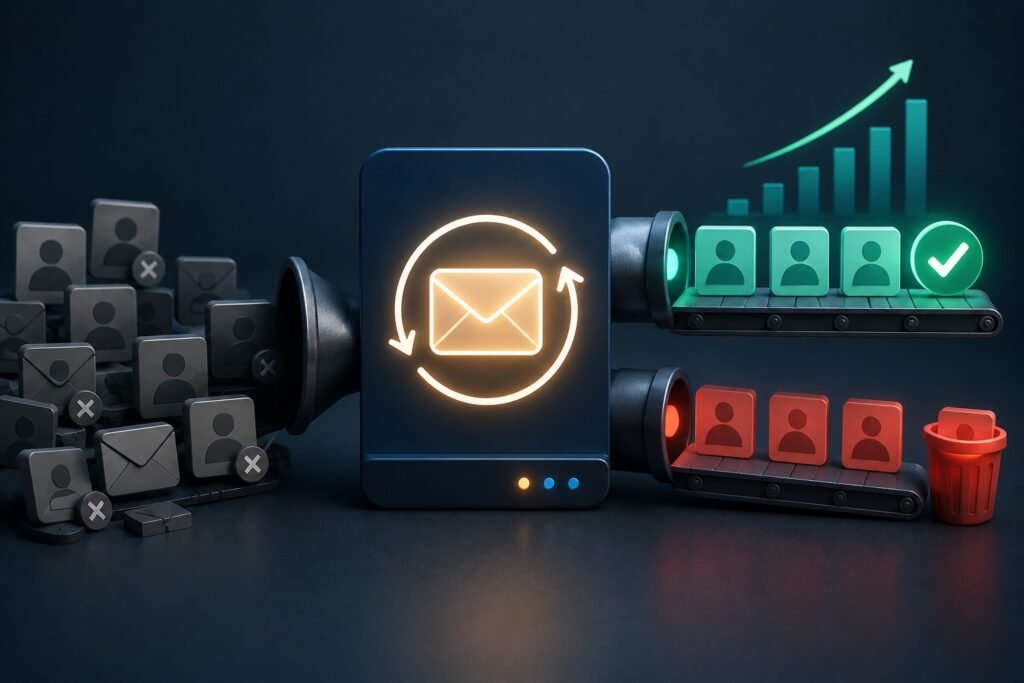
A list reactivation campaign is a targeted effort to re-engage dormant contacts — people on your list who haven’t opened, clicked, responded, or purchased in a defined period. The goal is to identify who’s still reachable and interested, win back the salvageable ones, and cleanly remove the truly dead weight.
Reactivation matters for two reasons. First, dormant contacts represent sunk acquisition cost — you already paid to acquire them, so re-engaging them is cheaper than finding new prospects. Second, and critically, dormant contacts who never engage actively
hurt your email program: sending repeatedly to unengaged addresses signals low quality to mailbox providers, dragging down deliverability for your whole list.
A reactivation campaign therefore serves a dual purpose: recover the contacts worth recovering, and identify the ones to suppress so they stop damaging your sender reputation. The outcome isn’t just re-engaged contacts — it’s a cleaner, healthier, better-performing list overall.
Common questions
What is a list reactivation campaign?
A list reactivation campaign is a targeted email sequence designed to reconnect with contacts who previously engaged but have become inactive. The goal is twofold: recover genuinely interested contacts and identify people who should no longer receive regular marketing. A good campaign treats reactivation as both a revenue opportunity and a list-hygiene exercise.
Who should be included in a reactivation campaign?
Start with contacts who have a history of legitimate engagement but have become inactive for a defined period. The appropriate inactivity window depends on how frequently you normally send emails. A monthly newsletter may use a longer window than a daily sender. Segmenting by inactivity period, previous engagement, customer value, and acquisition source can make the campaign more effective.
What type of email works best for reactivation?
The strongest reactivation emails usually have a simple message, a clear reason to return, and one obvious CTA. You might highlight useful new content, remind the contact of the value they originally signed up for, ask what they want to receive, offer an incentive, or provide a simple “stay subscribed” option. Personalizing the message based on previous behavior can make it more relevant than sending a generic promotional email.
How many emails should a reactivation sequence contain?
A short sequence of roughly 2–4 emails is generally more practical than repeatedly contacting an inactive segment. For example, the first email can offer value, the second can provide another reason to return, and the final message can clearly explain that non-responders will be suppressed. The exact number should depend on your normal sending frequency and the age of the inactive segment.
What reactivation rate should you expect?
There is no universal benchmark because results vary by industry, list source, inactivity period, previous engagement, and offer. Recent industry guidance commonly puts successful reactivation in the single-digit to mid-teens percentage range among inactive contacts, with some campaigns performing higher or lower. Treat this as a planning range rather than a guaranteed outcome.
Should you remove contacts who don’t respond?
Yes, at least from regular marketing sends. The purpose of reactivation is not to keep every record on the list indefinitely. If someone remains completely unresponsive after the defined sequence, suppressing them can improve list quality and prevent your engagement metrics from being distorted by inactive contacts. Whether you permanently delete the records should depend on your CRM, retention, and compliance requirements.
What should you avoid in a list reactivation campaign?
Avoid sending a large blast to an old, unverified inactive segment, repeatedly contacting people who have shown no interest, hiding the unsubscribe option, or treating opens as the only sign of re-engagement. Older inactive addresses can also present greater deliverability risk, so list validation and suppression should happen before the campaign. Apple Mail privacy features also make clicks, replies, purchases, and other stronger actions more useful than opens alone.
How should you measure whether a reactivation campaign worked?
Measure more than open rate. Track reactivation rate, clicks or replies, conversions, unsubscribe rate, complaints, bounce rate, and the percentage of non-responders ultimately suppressed. Also monitor whether reactivated contacts remain engaged afterward. A campaign that produces fewer total subscribers but leaves you with a smaller, more engaged, and more commercially valuable list can be more successful than one that maximizes list size.
How this applies to your business
Approach reactivation as list health, not just contact recovery. The campaign’s value is dual — it recovers the dormant contacts worth recovering
and identifies the ones to suppress so they stop dragging down your deliverability. Even a modest re-engagement rate is worthwhile when paired with the cleansing effect of suppressing persistent non-responders, because both outcomes improve your overall program performance.
Protect your sender reputation above the recovery goal. The temptation to blast a large dormant list for maximum recovery is exactly the mistake that damages deliverability to your good contacts. Validate first, batch carefully, monitor closely, and suppress non-responders promptly. A controlled reactivation that recovers fewer contacts but protects your reputation beats an aggressive one that recovers more but harms your ability to reach everyone else.
Prioritize reactivating contacts with genuine prior value — past customers and previously engaged leads — where the relationship history and sunk acquisition cost make recovery worthwhile. For contacts that were never valuable or are clearly dead, suppression is the right answer, not reactivation effort. Combine smart reactivation of salvageable contacts with fresh acquisition to replace the truly lost ones.
Iscope Digital’s
Database Marketing Solutions include list reactivation campaigns — validating, re-engaging, and cleansing dormant contacts while protecting deliverability — and append services to refresh the recoverable ones. For the deliverability stakes involved, see
Suppression lists explained, and to fill gaps with fresh contacts, our
B2B Email & Postal Data service.