In consumer marketing, “renting” a list and “buying” a list are fundamentally different transactions with different costs, rights, and obligations — yet the terms are often used loosely. Choosing the wrong one can mean overpaying, or using data in ways your agreement doesn’t permit. This article explains the difference, when each makes sense, and how to decide.
Rental vs purchase, defined
The core distinction is whether you ever hold the underlying records.
List rental grants one-time use of a consumer list without transferring the records to you. In the classic model, the list owner deploys your campaign on your behalf — you provide the creative, they send it to their list, and you receive only the
responders (consumers who clicked, replied, or converted). You never see or hold the full list. The list owner protects their asset; you get access to the audience for one campaign.
List purchase transfers the consumer records to you for ongoing use. You hold the data, can use it repeatedly (within compliance law), and control how and when it’s deployed. You own the records — though, like all consumer data, they decay and require maintenance, and your use remains subject to CAN-SPAM and state privacy laws.
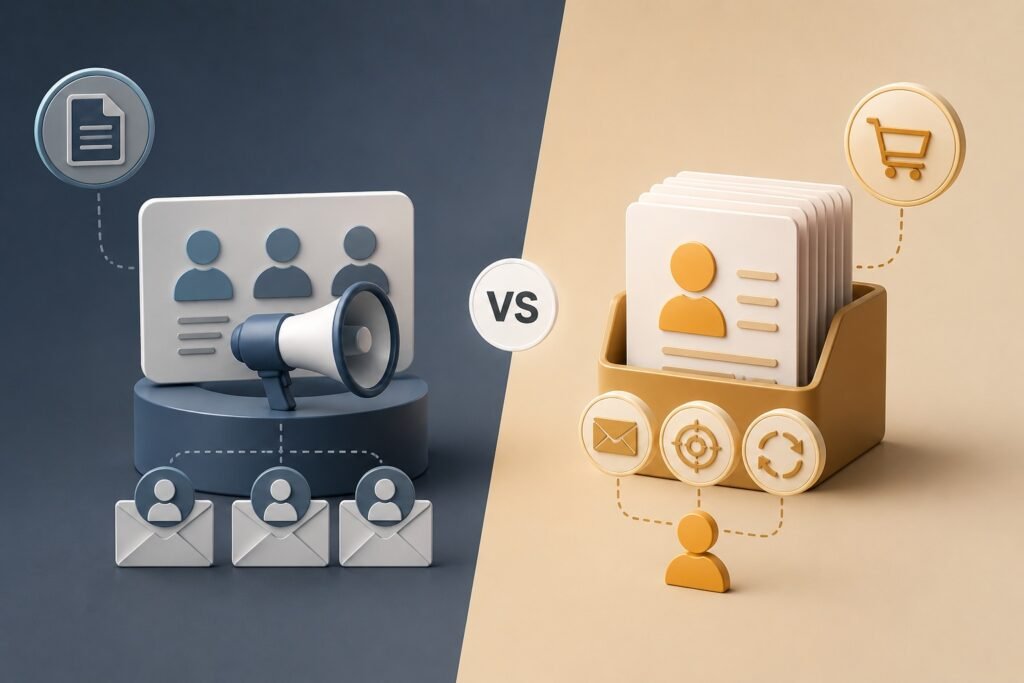
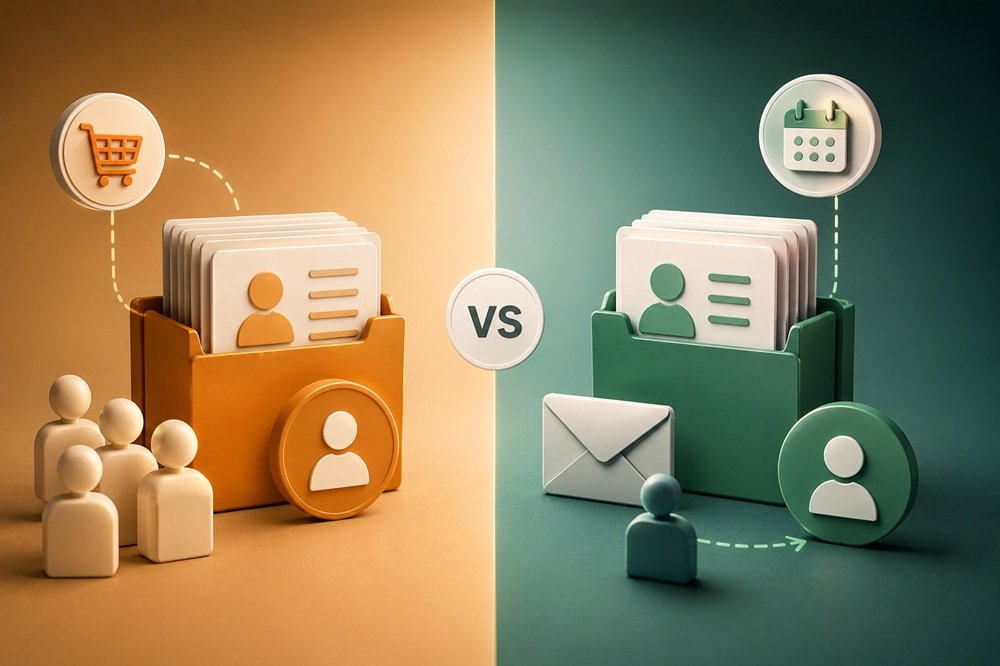
Rental is renting access to an audience; purchase is acquiring the data itself. The choice shapes cost, control, compliance responsibility, and what you can do with the responders.
Common questions
What’s the basic difference between renting and buying a list?
When you rent, you get one-time use of an audience without holding the records — often the list owner sends your campaign and returns only the responders. When you buy, the records transfer to you for ongoing use and you hold them directly. Renting is access for one campaign; buying is acquiring the data. Renting protects the owner’s asset and limits your use; buying gives you control and repeat use.
When does list rental make more sense?
Rental suits one-time campaigns against an audience you won’t need repeatedly, testing a new audience before committing to buy, and situations where the list owner’s deployment service adds value. It’s also common when the list owner simply won’t sell — many premium consumer lists are rental-only to protect their value. If you’ll touch this audience once, rental avoids paying to own data you won’t reuse, and you still capture the valuable responders.
When is buying the better choice?
Buying makes sense when you’ll use the audience repeatedly, need control over timing and deployment, want to integrate the data into your CRM, or need to build an owned audience over time. The economics favor buying when the per-campaign cost of repeated rentals would exceed the purchase price. If an audience is core to your ongoing marketing, owning it gives you control and repeat use that rental can’t.
Who handles compliance in each model?
In rental where the owner deploys, the list owner handles much of the sending mechanics and compliance, since they control the send. In purchase where you deploy, you bear direct responsibility for CAN-SPAM compliance, suppression, and opt-out handling in your campaigns. Both models should come with documentation of the data’s lawful sourcing, but the deployment responsibility — and thus much of the sending compliance — shifts to you when you buy and send yourself.
What do I actually get to keep with a rental?
The responders. In the classic rental model, you don’t keep the full list, but consumers who respond to your campaign — click, reply, convert — become your contacts that you can keep and remarket to (within compliance). This is a key point: rental gives you the valuable subset (engaged responders) without the cost of buying the entire list. Over several rentals, you can build an owned audience of responders organically.
Is rental cheaper than buying?
For a single campaign, usually yes — you pay for one use rather than ownership of the entire list. But for repeated campaigns against the same audience, the cost of multiple rentals adds up and eventually exceeds a purchase. The break-even depends on rental pricing versus purchase price and how many campaigns you’ll run. One or two campaigns favor rental; many campaigns against the same audience favor buying.
Can I rent a list, then buy it if it performs?
Often, yes — and it’s a smart approach. Renting first lets you test an audience’s performance before committing to a purchase. If the rented campaign performs well, you can negotiate to buy the list (where the owner permits sale) or continue renting if buying isn’t an option. Test-then-commit reduces the risk of buying a large list that turns out not to perform. Confirm upfront whether the list is available for purchase if you’ll want that option.
How this applies to your business
Decide based on how often you’ll use the audience. A one-time seasonal campaign, a market test, or a reach into an audience you won’t revisit favors rental — you get access and keep the responders without paying to own data you’d use once. An audience central to your ongoing marketing, used campaign after campaign, favors purchase, where repeat use justifies owning the records.
What is consumer list rental?
List rental is an arrangement where a business receives permission to market to an audience controlled by another company, usually for a specific campaign or period. The business generally does
not receive permanent ownership of the underlying consumer database. Depending on the arrangement, the list owner may send the campaign itself or provide controlled access under specific usage restrictions.
What is consumer list purchase?
List purchase refers to paying for a consumer contact database or collection of records with the expectation of obtaining ongoing access to the data. However, “purchase” does not necessarily mean you legally own the underlying personal information. Contracts may impose restrictions on how the records can be used, shared, stored, or contacted. Buyers should carefully review the vendor’s licensing terms rather than assuming a purchase provides unrestricted rights.
What is the main difference between renting and purchasing a consumer list?
The key distinction is
control and usage rights. With a rental, access is typically limited to a particular campaign or period and the list owner retains control. With a purchase, the buyer generally receives a broader license to use the records according to contractual terms. Neither model automatically gives a business unrestricted permission to contact consumers.
Is renting a consumer list cheaper than buying one?
A rental can have a lower upfront cost because the business is paying for a specific campaign or limited use rather than broader access to the data. Purchasing can make more sense when the same audience will be used repeatedly and the license permits that use. Compare the
total cost per usable contact and expected campaign value, rather than simply comparing the initial price.
When does consumer list rental make sense?
Rental can make sense when you want to test a new audience, run a one-time promotion, reach a niche demographic, or avoid taking on the cost and maintenance of a large database. It can also be useful when the list owner has an established relationship with the audience and can send the message on your behalf under its existing communication framework.
When is purchasing a consumer list more appropriate?
Purchase or ongoing licensing may make sense when you need repeated access to the same audience and have a legitimate, compliant use case for the data. It can also be useful when you need to enrich your own database or integrate permitted records into your marketing workflow. Before purchasing, confirm that the contract actually grants the intended rights and that the data can legally be used for your planned channels.
Can you email a rented or purchased consumer list?
Not automatically. Permission and legal requirements depend on the jurisdiction, communication channel, data source, and nature of the message. Buying or renting a list does not itself create consumer consent. Before sending email or SMS, verify that the vendor’s collection and permission practices support your intended use and that your campaign complies with applicable requirements.
What should you ask a consumer list vendor before renting or buying?
Ask:
- Where was the data collected?
- How recently was it collected or verified?
- What permissions were obtained?
- What channels does the permission cover?
- Who is permitted to contact the consumer?
- Can the vendor provide documentation of its sourcing and consent process?
- What geographic and demographic restrictions apply?
- How are opt-outs and suppression requests handled?
- Are records exclusive or shared with other marketers?
- What happens when a consumer withdraws permission?
- What accuracy or replacement guarantees are provided?
Which is better for consumer marketing: list rental or purchase?
Neither is universally better.
Rent a list when you need controlled, limited access to an audience; consider purchasing or licensing when you need repeated, permitted use of the same data. For most consumer marketers, the quality and lawful usability of the audience matter more than the rental-versus-purchase label. A smaller, well-sourced audience with clear permission can be considerably more valuable than a large database with uncertain provenance.
Use rental as a low-risk test before buying. Renting first lets you measure how an audience actually performs before committing real money to ownership. The responders you keep from a rental campaign are valuable in their own right — over several rentals, you build an owned audience of engaged consumers without a large upfront purchase.
Whichever model you choose, read the usage rights and clarify compliance responsibility. Know exactly what you can do with the data (and the responders), who handles opt-out and suppression, and what documentation backs the data’s lawful sourcing. The model determines not just cost but who bears which compliance obligations — get that clear before the campaign runs.
Iscope Digital’s
B2C Email & Postal Data service supports both list rental (with campaign deployment and responder return) and list purchase, with the right model recommended based on your usage. For the cost comparison, see
How much does B2C consumer data cost per record? and on the compliance obligations either model carries,
Is B2C email marketing still legal in the US?