Review sites like G2 are a natural first stop when vetting a data vendor — and they’re genuinely useful. But they also have real blind spots, and leaning on them too heavily can mislead you. Here’s how to get value from reviews while understanding what they can’t tell you.
Why Buyers Turn to Review Sites
Review sites aggregate feedback from real users, offering a quick read on a vendor’s reputation, strengths, and common complaints. For an initial shortlist, they’re a reasonable starting point — far better than relying on the vendor’s own marketing alone. The key is treating them as one input, not the whole decision.
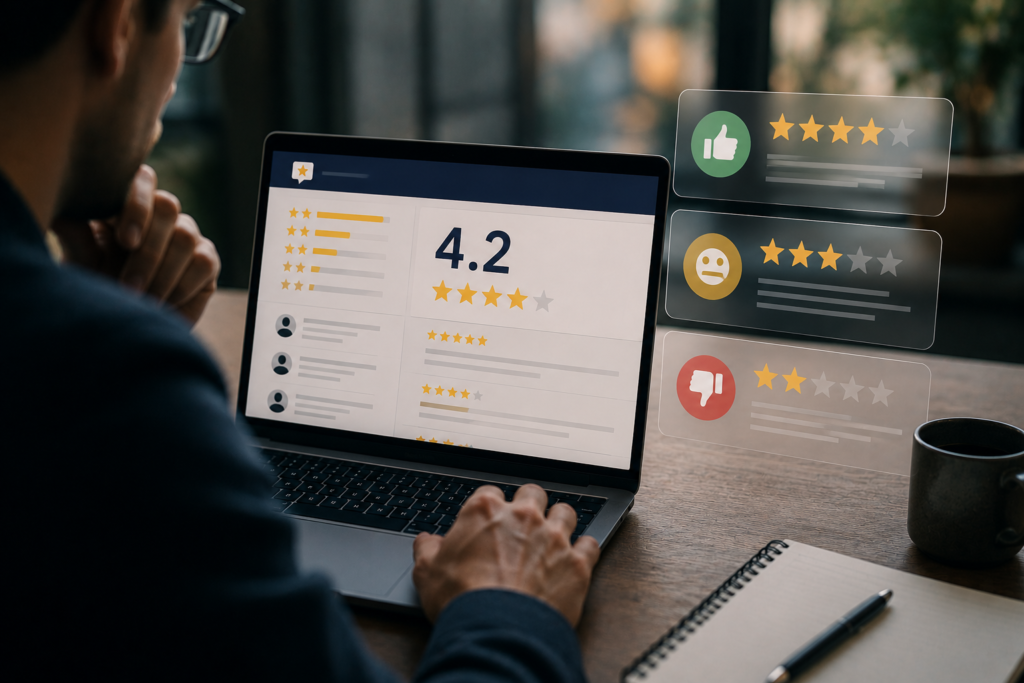
What Reviews Are Good For
Reviews shine at surfacing patterns: recurring praise or complaints, common usability issues, support experiences, and general sentiment. If many users flag the same problem — poor support, surprise charges, declining quality — that pattern is meaningful signal. Reviews are most useful for these aggregate themes rather than any single opinion.
What Reviews Can’t Tell You
Reviews can’t tell you how a vendor’s data will perform for
your specific target, because another user’s niche and needs differ from yours. They also rarely contain rigorous accuracy measurements, and they can’t replace a sample audit. The thing that matters most — real data quality in your segment — is exactly what reviews don’t reliably reveal.
The Bias Problem
Review samples are skewed. People with strong experiences — very good or very bad — are likelier to post, and incentivized reviews and selective curation can tilt the picture. Read with this in mind: weigh the substance and consistency of feedback over star averages, and be skeptical of suspiciously uniform praise.
How to Use Reviews Wisely
Use reviews to build a shortlist and surface questions, not to make the final call. Look for recurring themes rather than outliers, note specific, detailed complaints, and carry the concerns into your vendor conversations. Then verify what matters — data quality for your target — through a sample audit, which reviews can’t substitute for.

Combining Reviews With Direct Verification
The strongest approach pairs reviews with your own testing. Let reviews narrow the field and flag risks, then run a sample audit and ask the questions the reviews raised. Reviews tell you about other people’s experiences; your own verification tells you about yours. Together they give a far more reliable picture than either alone.
Key Takeaways
Review sites are useful for building a shortlist and spotting recurring themes about reputation, support, and usability — but they can’t tell you how data will perform for your target, and they carry sampling bias. Read for patterns over star averages, stay skeptical of skewed reviews, and always pair them with your own sample audit to verify what matters most.
Frequently Asked Questions
Are review sites useful for vetting data vendors?
Yes, as a starting point. They surface reputation, common complaints, and support experiences, but they’re one input, not the whole decision.
What are reviews good for?
Spotting patterns — recurring praise or complaints, usability issues, support quality, and general sentiment across many users.
What can’t reviews tell me?
How a vendor’s data will perform for your specific target. Another user’s niche differs from yours, and reviews rarely contain rigorous accuracy measures.
Do reviews replace a sample audit?
No. The thing that matters most — real data quality in your segment — is exactly what reviews don’t reliably reveal. Always test a sample.
Are review sites biased?
They can be. People with extreme experiences post more, and incentivized or curated reviews can skew the picture. Weigh substance over star averages.
How should I read reviews?
Look for recurring, detailed themes rather than outliers, and be skeptical of suspiciously uniform praise. Patterns matter more than individual opinions.
Can I trust star ratings?
Treat them cautiously. Averages can be skewed by biased samples, so read the substance of reviews rather than relying on the headline score.
How do I use reviews in my decision?
To build a shortlist and surface questions, then carry concerns into vendor conversations and verify quality with your own sample audit.
What’s the best way to combine reviews with verification?
Let reviews narrow the field and flag risks, then run a sample audit and ask the questions reviews raised. Together they give a reliable picture.
Should reviews be my main decision factor?
No. They inform your shortlist, but data quality for your target — confirmed by testing — should drive the final decision.