Buy a B2B list today and a chunk of it will be wrong within a year — not because the vendor sold you bad data, but because of data decay. It’s a constant, invisible process that erodes accuracy whether you do anything or not. Understanding it is the first step to keeping your data working. Here’s what decay is, what it costs, and how to fight it.
What Data Decay Is
Data decay is the gradual process by which contact records become outdated as the real world changes. Every job change, company merger, rebrand, or deactivated email makes a record a little less accurate. It’s not a flaw in any single dataset — it’s the natural drift of information about people and companies that never stand still.
How Fast Does B2B Data Decay?
Industry estimates commonly put B2B contact decay at roughly 25–30% per year. That means a meaningful share of any list loses accuracy within twelve months, and the pace is faster in high-churn sectors like technology. Even a pristine database degrades steadily the moment it stops being maintained.
What Causes Contacts to Go Stale
Several forces drive decay at once: people change jobs or get promoted (breaking title and email), companies merge or rebrand (changing domains and details), employees leave (deactivating addresses), and phone numbers get reassigned. Because all of these happen continuously across your whole list, decay is relentless rather than occasional.

The Hidden Costs of Decayed Data
Decay costs more than a few bounced emails. Hard bounces from dead addresses damage your sender reputation, hurting deliverability for your good contacts too. Reps waste time on disconnected numbers, marketing budget is spent reaching people who’ve moved on, and outreach with outdated titles lands as careless. The costs accumulate quietly across every channel.
How to Measure Decay in Your Own Database
You can gauge decay by tracking bounce rates over time and periodically auditing a sample of records against current reality. Rising bounces and an increasing share of wrong titles or employers tell you decay is outpacing your maintenance. Measuring it turns an invisible problem into something you can manage.
Strategies to Fight Data Decay
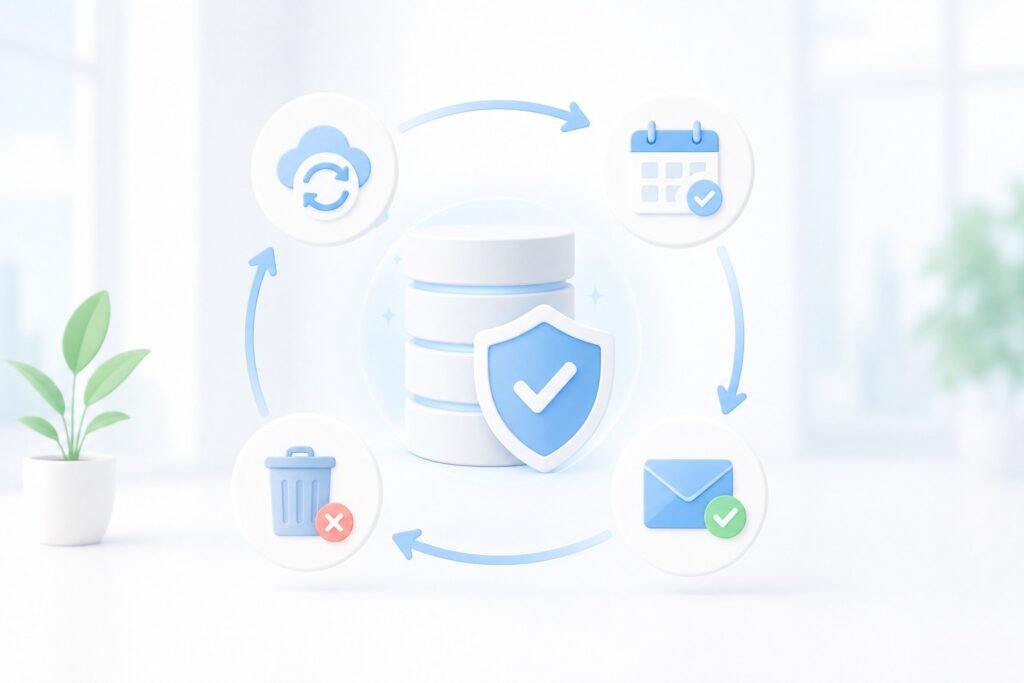
The antidote is ongoing maintenance, not a one-time fix. Use a continuously refreshed data source, re-enrich your CRM on a regular schedule, validate emails before sending, and remove bounces promptly. Building data hygiene into your routine keeps decay from compounding into a results problem.
Key Takeaways
Data decay erodes roughly a quarter to a third of B2B contacts each year because people and companies are always changing. Its costs — reputation damage, wasted time and budget, weaker outreach — build quietly. The only real defense is continuous refresh and regular data hygiene rather than treating a database as a one-time purchase.
Frequently Asked Questions
What is data decay?
It’s the gradual process by which contact records become outdated as people change jobs, companies merge, and emails are deactivated. It happens continuously to any dataset.
How fast does B2B data decay?
Commonly estimated at around 25–30% per year, and faster in high-churn industries like technology. Even high-quality data degrades steadily without maintenance.
What does data decay cost a business?
Bounced emails that damage sender reputation, wasted rep time on dead numbers, budget spent reaching people who’ve moved on, and outreach weakened by outdated details.
How do I prevent data decay?
Use a continuously refreshed source, re-enrich your CRM regularly, validate emails before sending, and remove bounces promptly. Data hygiene has to be ongoing.
How can I tell if a database provider actively manages data decay?
Ask how records are verified, how frequently updates occur, and whether the provider tracks events such as job changes, company closures, and email invalidations. Active monitoring is usually a stronger indicator of quality than database size alone.
Which types of B2B data become outdated the fastest?
Job titles, employers, direct phone numbers, and email addresses typically change more frequently than company-level information such as industry or headquarters location. Contact-level data usually requires the most frequent verification.
Does data decay affect small businesses and large enterprises differently?
The decay itself is similar, but the impact can vary. Large organizations often feel the effects across thousands of records, while smaller businesses may notice it through declining campaign performance and reduced prospecting efficiency.
Can data decay impact sales forecasting and reporting?
Yes. Outdated contact and account records can distort pipeline reports, inflate lead counts, and make it harder to accurately measure sales and marketing performance. Clean data supports more reliable forecasting.
What should I ask a vendor about data quality before buying?
Ask about verification methods, update frequency, record freshness, bounce rate expectations, and how they handle outdated information. Understanding these processes can help you evaluate how effectively the provider combats data decay.
When should I replace my contact database instead of cleaning it?
If a significant portion of your records are outdated, bounce rates are rising, and your team spends more time verifying contacts than selling, replacing or supplementing your database may be more cost-effective than repeatedly cleaning old data. A high-quality, continuously updated B2B database can help restore outreach performance, improve lead quality, and reduce the hidden costs associated with data decay.