“Cold email” and “lead generation” are sometimes used as if they’re the same thing, but they’re distinct approaches with different legal footing, tactics, and economics. Confusing them leads to compliance risk and strategic mistakes. This article clarifies the difference and compares the two across the dimensions that matter.
The fundamental distinction
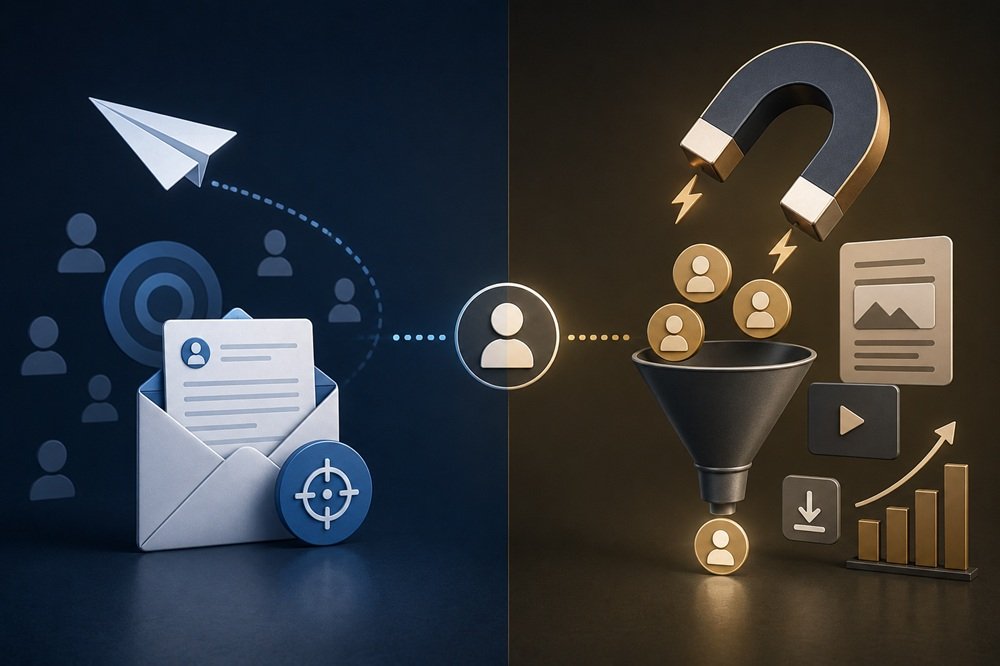
The terms describe different things at different levels.
Lead generation is the broad discipline of attracting and capturing prospect interest through many possible channels — content, paid campaigns, events, syndication, and yes, sometimes outbound email.
Cold email is one specific outbound tactic: sending commercial email to prospects who haven’t previously engaged with you, sourced from contact data rather than inbound interest.
So cold email is one tactic that can be part of lead generation, not an alternative to it. But in common usage, people often contrast “cold email” (outbound, you reaching out to sourced prospects) with “lead generation” (inbound or campaign-driven capture of prospects who took some action toward you). Understood that way, the contrast is between outbound outreach to cold prospects and the capture of warmer, self-identified leads.
The differences that matter fall into three areas.
Legal: cold email to sourced contacts operates under CAN-SPAM (and stricter regimes abroad), with specific compliance requirements, while inbound lead capture involves prospects who engaged with you.
Tactical: cold outreach requires different messaging and sequencing than warm lead follow-up.
Economic: the cost structures and conversion patterns differ. Understanding these differences guides when to use each.
Common questions
Is cold email the same as lead generation?
No. Lead generation is the broad discipline of attracting and capturing prospect interest through many channels; cold email is one specific outbound tactic within (or alongside) it — sending commercial email to prospects sourced from contact data who haven’t previously engaged with you. Cold email can be part of a lead-generation program, but the two aren’t synonyms. In common usage, people contrast outbound cold email with the capture of warmer, self-identified leads — but technically, cold email is a tactic, lead generation is the discipline.
Is cold email legal?
In the US, commercial cold email is legal under CAN-SPAM, which is an opt-out regime — you can email prospects without prior consent provided you meet the requirements (accurate headers, honest subject lines, identification as an advertisement, physical address, functioning opt-out honored promptly). However, other jurisdictions are stricter — the EU (GDPR) and Canada (CASL) generally require prior consent, making cold email to those regions far more restricted. So cold email’s legality depends heavily on where recipients are. This is general information, not legal advice.
What’s the legal difference between cold email and inbound lead capture?
Inbound lead capture involves prospects who took an action toward you (filled a form, downloaded content), often providing some level of consent or at least clear interest. Cold email reaches sourced prospects who haven’t engaged — relying on CAN-SPAM’s opt-out framework rather than any prior relationship or consent. Both must comply with CAN-SPAM, but cold email’s lack of prior engagement makes compliance discipline (honoring opt-outs, accurate sourcing, suppression) especially important, and makes stricter foreign regimes a bigger constraint. The consent posture differs.
Which produces better-quality leads?
Inbound and campaign-captured leads generally have higher intent than cold-email prospects, because they took an action indicating interest, while cold-email recipients were sourced and contacted without prior engagement. So warm lead capture typically produces higher-intent leads, while cold email reaches a broader audience of prospects who haven’t signaled interest. Cold email can still work well with good targeting and messaging, but the leads start colder and require more nurturing to convert. The intent difference is the core tactical distinction.
What are the tactical differences?
Cold outreach requires earning attention from prospects who didn’t ask to hear from you — strong targeting, compelling and relevant messaging, careful sequencing, and patience, since you’re starting from no relationship. Warm lead follow-up can build on existing interest — acknowledging what the prospect engaged with and advancing from there. Cold email also demands more attention to deliverability and sender reputation (sending to cold, sourced contacts carries more bounce and complaint risk). The tactics diverge because the starting relationship differs.
What are the economic differences?
Cold email can be economical to send (low per-message cost) but has lower response rates and requires volume and good targeting to produce results, plus the cost of quality sourced data. Inbound and campaign-captured leads often cost more to generate per lead (paid campaigns, content) but convert at higher rates due to higher intent. The economics depend on execution: well-targeted cold email can be cost-effective for reaching specific prospects; warm capture costs more per lead but converts better. Neither is universally cheaper per
customer.
When should I use cold email versus other lead-gen approaches?
Cold email suits reaching specific, identifiable target accounts or prospects who aren’t finding you inbound — proactive outbound to a defined audience. Inbound and campaign-driven lead generation suits capturing prospects already showing interest or searching for solutions like yours. Many strong programs use both: cold outbound to proactively reach target accounts, plus inbound/campaign capture for prospects who self-identify. The choice depends on whether you’re proactively reaching out to defined targets (cold email) or capturing self-identified interest (warm lead gen).
How this applies to your business
Understand that cold email is a tactic within lead generation, not an alternative to it — and choose based on whether you’re proactively reaching defined targets or capturing self-identified interest. Cold outbound suits reaching specific accounts that aren’t finding you inbound; warm capture suits prospects already showing interest. Many programs use both. Clarity about which approach fits which goal prevents the strategic confusion that treating them as interchangeable causes.
Mind the legal differences carefully, especially geography. US cold email operates under CAN-SPAM’s opt-out framework with specific requirements, but stricter regimes abroad (GDPR, CASL) generally require prior consent, making cold email to those regions far more constrained. Cold email’s lack of prior engagement also makes compliance discipline — honoring opt-outs, quality sourcing, suppression — especially critical. Know where your recipients are and comply accordingly; consult counsel for your situation.
Match tactics and expectations to the starting relationship. Cold email starts from no relationship, so it needs strong targeting, compelling messaging, careful deliverability management, and patience, with leads that require more nurturing. Warm lead capture builds on existing interest and converts more readily. Setting tactics and conversion expectations to the actual intent level — colder for cold email, warmer for captured leads — produces realistic plans and better results.
Iscope Digital’s
Online Lead Generation service combines outbound and inbound approaches with compliant, well-sourced data and deliverability management. For the compliance framework behind outbound email, see
Is B2C email marketing still legal in the US? and for the deliverability discipline cold email demands,
What is email deliverability?