First-time data buyers tend to make the same handful of mistakes — and each one is avoidable once you know to watch for it. Learning from others’ missteps can save you money, time, and a damaged sender reputation. Here are the most common B2B data buying mistakes and how to avoid them.
Why New Buyers Stumble
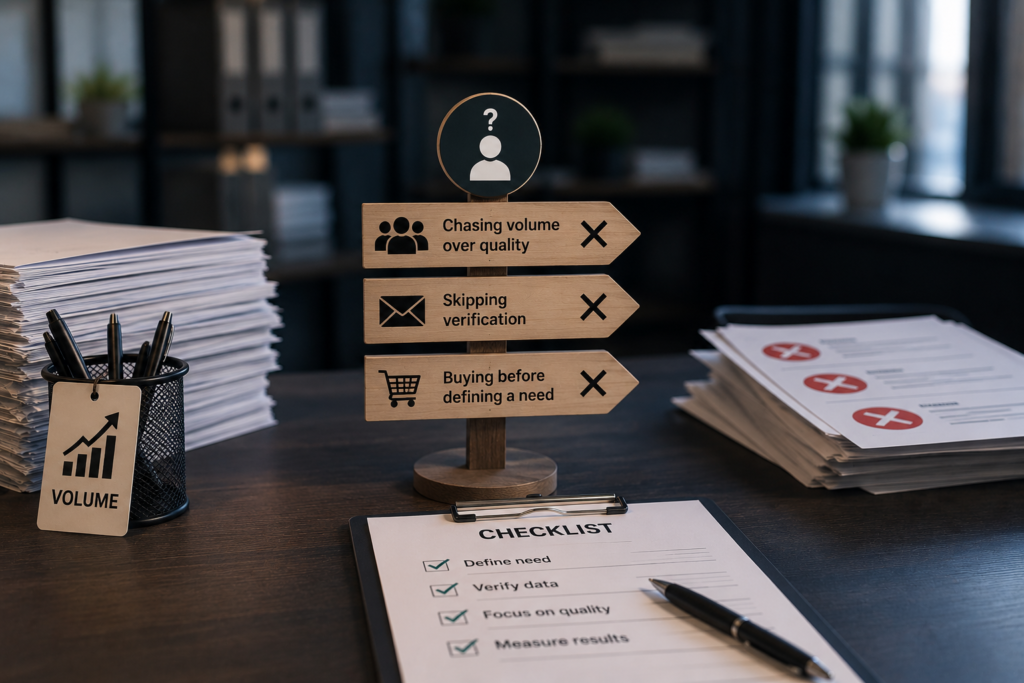
Most mistakes come from focusing on the wrong things: chasing volume over quality, skipping verification, or buying before defining a need. These errors are understandable but costly. The good news is that they’re predictable, so a buyer who knows them can sidestep nearly all of them with a little discipline.
Mistake 1: Choosing Volume Over Quality
The most common trap is being seduced by big record counts. A huge database full of stale or irrelevant records performs worse than a smaller, accurate, well-targeted one. Volume feels reassuring but doesn’t convert. Evaluate quality and coverage of your specific target instead of the headline number.
Mistake 2: Skipping the Sample Audit
Many buyers trust vendor claims and skip testing the data first. This is how teams end up with data that bounces and disappoints. A sample audit of real records from your target is the single best protection against a bad purchase — and skipping it is one of the easiest mistakes to avoid.
Mistake 3: Buying Before Defining the Need
Some buyers purchase data before they’ve defined their target, their use, or even whether they need it. The result is data that sits unused or doesn’t fit. Define your ideal customer, your fields, and your process first — then buy data that matches. Buying first and figuring it out later wastes spend.
Mistake 4: Ignoring Compliance and Sourcing
New buyers often overlook where data came from and whether they can use it compliantly. That oversight can become a real liability. Vet sourcing and understand the rules for your regions before buying. Treating compliance as an afterthought is a mistake that can outlast the data itself. (General information, not legal advice.)
Mistake 5: Mistreating the Data Once Bought
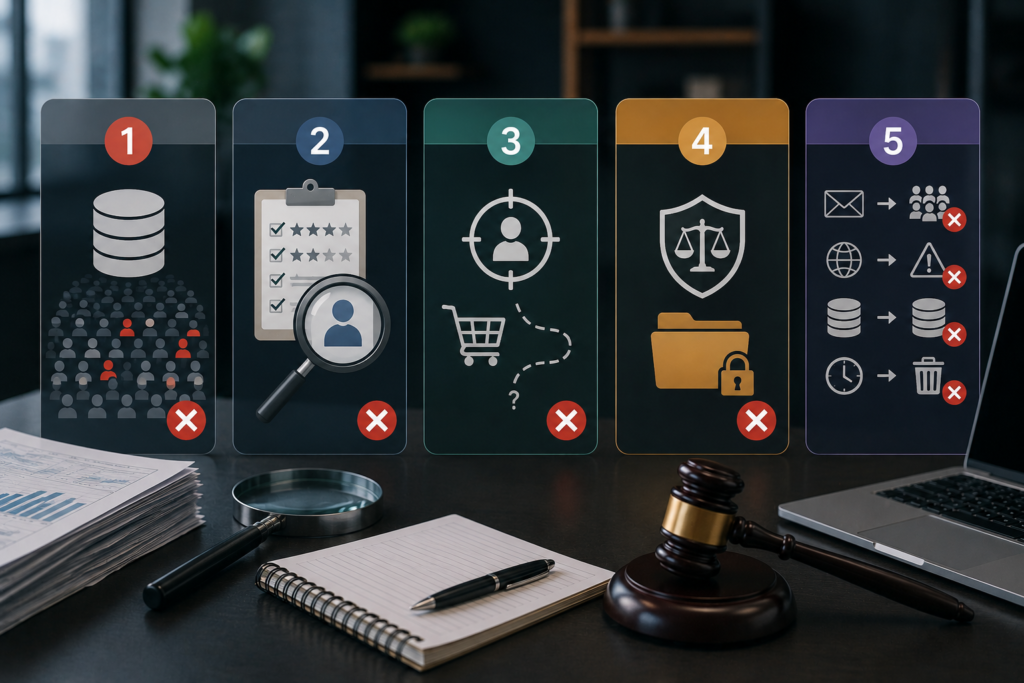
Even good data gets wasted by poor use: blasting one generic message to everyone, sending from an un-warmed domain, neglecting deduplication, or letting the data go stale. The purchase is only the start; how you use, segment, and maintain the data determines results. Many “bad data” complaints are really bad-usage complaints.
Key Takeaways
The most common B2B data buying mistakes are choosing volume over quality, skipping the sample audit, buying before defining the need, ignoring compliance and sourcing, and mistreating the data once bought. Each is avoidable: prioritize quality and fit, always test a sample, define your need first, vet sourcing, and use the data well with segmentation, warm-up, and hygiene.
Frequently Asked Questions
What’s the most common B2B data buying mistake?
Choosing volume over quality — being seduced by big record counts when a smaller, accurate, well-targeted database performs better.
Why is skipping the sample audit a mistake?
Because trusting vendor claims without testing leads to data that bounces and disappoints. A sample audit is the best protection against a bad purchase.
Should I define my need before buying?
Yes. Define your ideal customer, fields, and process first, then buy matching data. Buying first and figuring it out later wastes spend.
Why does compliance get overlooked?
New buyers focus on data and price, missing sourcing and usage rules. That oversight can become a liability, so vet sourcing and know your regions’ rules.
Can good data still be wasted?
Yes. Generic blasts, un-warmed domains, neglected deduplication, and letting data go stale waste even good data. Usage determines results.
Is a big database always better?
No. A huge database of stale or irrelevant records performs worse than a smaller, accurate, well-targeted one. Quality beats volume.
How do I avoid buying the wrong data?
Define your need, prioritize quality and coverage of your target, and verify with a sample audit before committing.
Are “bad data” complaints always about the data?
Often not. Many are really bad-usage complaints — poor segmentation, no warm-up, or neglected hygiene — rather than the data itself.
What should I do before launching outreach?
Clean and segment the data, warm up your sending domain, validate emails, and set up suppression lists — don’t just blast the whole list.
How do I avoid these mistakes overall?
Prioritize quality and fit, test a sample, define your need first, vet compliance, and use the data well with segmentation, warm-up, and ongoing hygiene.