A database that looks cheap per record can turn out expensive once you count what actually converts. Cost per record and cost per lead measure very different things, and confusing them leads buyers to chase a low sticker that delivers poor value. Here’s how to tell them apart and measure what really matters.
Two Ways to Measure Data Cost
Cost per record is what you pay for each contact you acquire. Cost per lead is what you pay for each
usable lead the data actually produces. The first is easy to see on a pricing page; the second is what determines real value. A low cost per record means little if few of those records convert into leads.
What Cost Per Record Tells You
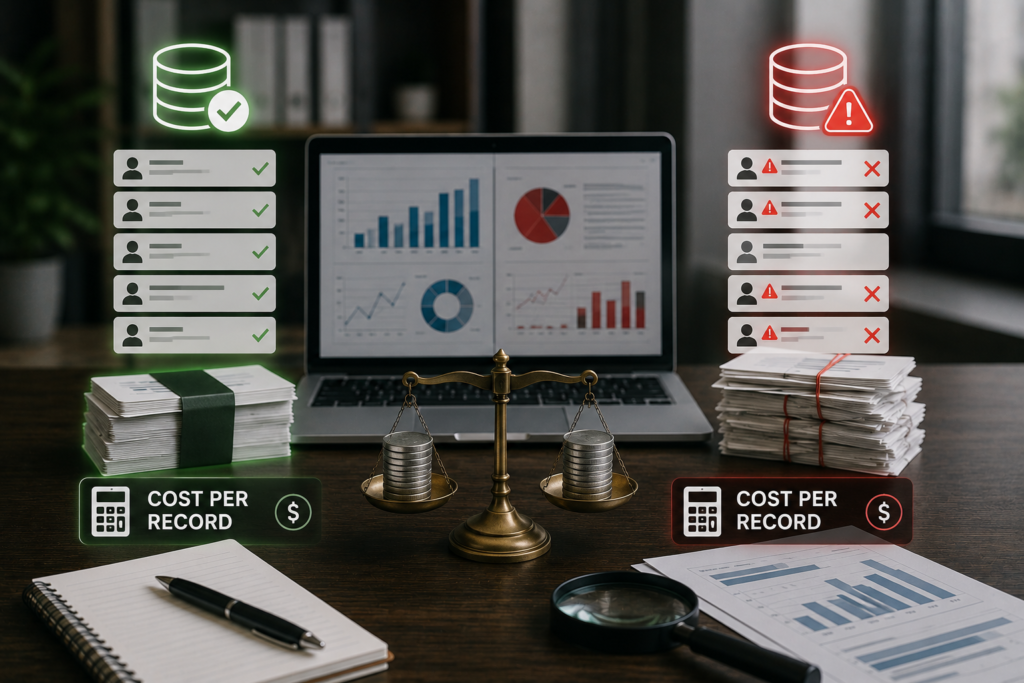
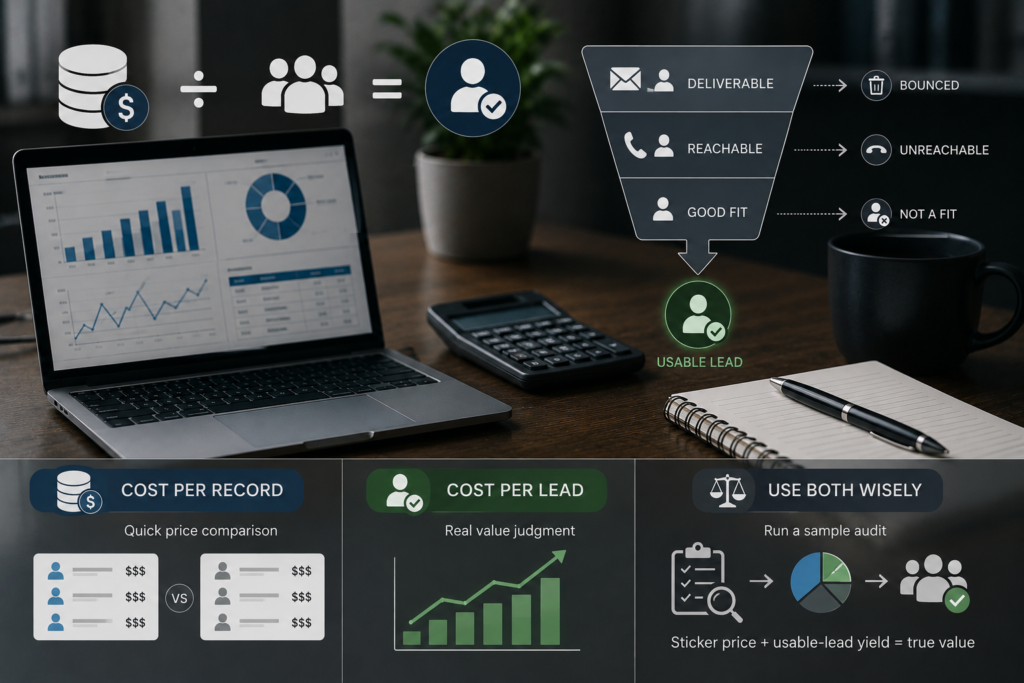
Cost per record is a simple unit price: total spend divided by records acquired. It’s useful for comparing raw prices, but it’s blind to quality. Two databases with identical cost per record can deliver wildly different results if one is accurate and current while the other is stale — so the number alone can mislead.
What Cost Per Lead Tells You
Cost per lead accounts for quality by measuring what you pay for each contact that becomes a usable lead — deliverable, reachable, and a genuine fit. It captures the effect of accuracy, fit, and decay that cost per record ignores. Because it reflects real outcomes, cost per lead is the more honest measure of value.
Why Cheap Records Can Be Expensive Leads
Here’s the trap: a database with a rock-bottom cost per record but poor accuracy produces few usable leads, pushing the cost per lead sky-high. Meanwhile, a pricier-per-record but accurate database yields more usable leads, making each lead cheaper. Cheap records and cheap leads are not the same thing — and only the latter matters.
How to Calculate Cost Per Lead
To estimate cost per lead, take your total data spend and divide by the number of usable leads the data produced — contacts that were deliverable, reachable, and a real fit. You’ll need to track outcomes through your funnel to get this, but even a rough figure reveals which data delivers genuine value versus which just looks cheap.
Using Both Metrics Wisely
Use cost per record for a quick price comparison and cost per lead for the real value judgment. Better still, run a sample audit before buying so you can estimate how many records will actually be usable. The combination — sticker price plus expected usable-lead yield — tells you far more than either number alone.
Key Takeaways
Cost per record is the sticker price per contact; cost per lead is what you pay per usable lead and reflects data quality. Cheap records can become expensive leads when accuracy is poor, so judge value on cost per lead. Use cost per record only for quick comparisons, and validate expected usable yield with a sample audit.
Frequently Asked Questions
What’s the difference between cost per lead and cost per record?
Cost per record is what you pay per contact acquired; cost per lead is what you pay per usable lead the data produces. The latter reflects quality and is the truer value measure.
Why isn’t cost per record enough?
Because it’s blind to quality. Two databases with the same cost per record can deliver very different results depending on accuracy and freshness.
How do I calculate cost per lead?
Divide total data spend by the number of usable leads produced — contacts that were deliverable, reachable, and a genuine fit. Track outcomes through your funnel.
Can cheap data have a high cost per lead?
Yes. Low cost per record with poor accuracy produces few usable leads, driving cost per lead sky-high. Cheap records aren’t cheap leads.
Which metric should I trust?
Cost per lead for real value, since it reflects quality and outcomes. Use cost per record only for quick price comparisons.
How can I estimate cost per lead before buying?
Run a sample audit to gauge how many records will be usable, then combine that expected yield with the sticker price.
What makes a record “usable” as a lead?
It’s deliverable, reachable, and a genuine fit for your target. Records failing any of these don’t count as usable leads.
Does data decay affect cost per lead?
Yes. Decay reduces usable leads over time, raising your effective cost per lead, which is why freshness matters to value.
Should I ignore cost per record entirely?
No — it’s useful for a fast comparison. Just don’t mistake it for value; pair it with cost per lead for the full picture.
How does this help me choose a vendor?
By comparing expected cost per lead, not just sticker price, you choose the data that delivers genuine value rather than the one that merely looks cheap.