Many buyers accept a data vendor’s first quote as fixed but B2B data contracts are often more negotiable than they appear. Price is only one lever; terms, guarantees, and flexibility all sit on the table too. Knowing what you can negotiate helps you get a better deal and protect yourself. Here’s a practical guide.
Why Data Contracts Are Negotiable
Data vendors operate in a competitive market with meaningful margin on subscriptions, which gives them room to move especially on annual deals, larger commitments, or at quarter-end. Treating the first quote as a starting point rather than a final price is reasonable. The worst outcome of asking is usually just “no.”
Price and Discounts
Price is the obvious lever. Annual commitments, multi-year terms, larger seat or volume counts, and timing your purchase to a vendor’s sales cycle can all unlock discounts. Be specific about your budget and willing to walk; competing quotes from alternative vendors strengthen your position considerably.

Contract Length and Flexibility
Beyond price, the shape of the commitment matters. You can often negotiate contract length, the ability to scale up or down, pause options, or shorter initial terms to reduce risk. Flexibility can be worth as much as a discount a slightly higher rate with the freedom to adjust may beat a cheap, rigid lock-in.
Usage Limits and Overage Terms
Usage caps and overage rates are negotiable and important. You can push for higher included volume, better overage pricing, rollover of unused credits, or removal of punitive overage fees. Since these terms drive your real cost in busy months, they deserve as much attention as the headline price.
Guarantees and SLAs
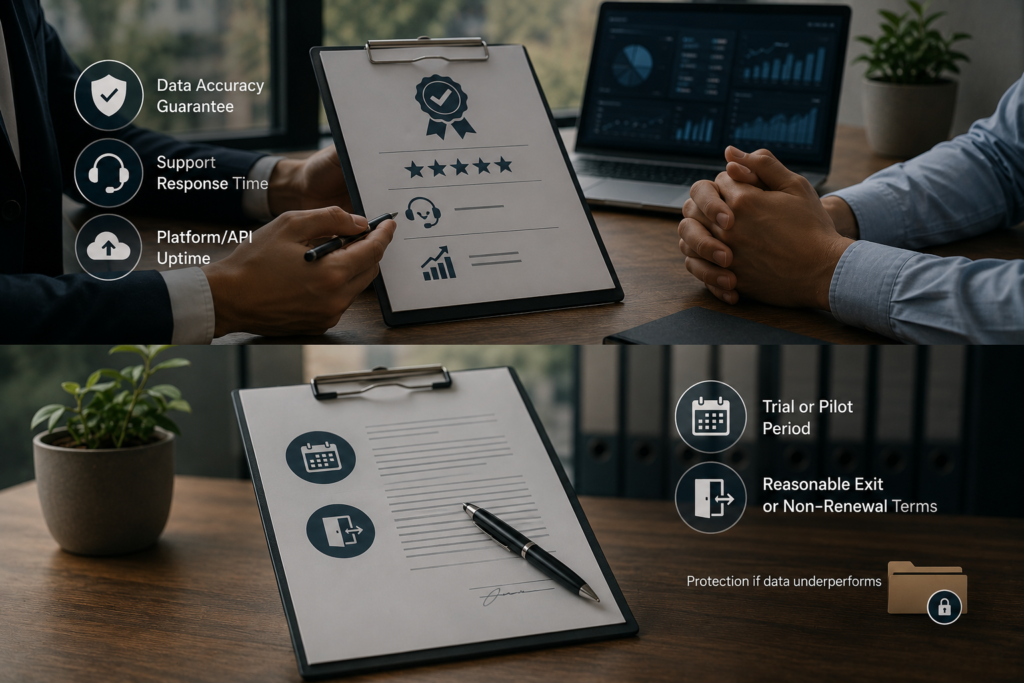
Quality guarantees and service levels are part of the deal. Ask about data accuracy guarantees (such as credits for excessive bounces), support response times, and uptime for any platform or API. A vendor confident in their data will often stand behind it and a written guarantee gives you recourse if quality falls short.
Trial Periods and Exit Terms
Finally, negotiate how you get in and out. A trial or pilot period lets you verify quality before committing fully, and reasonable exit or non-renewal terms protect you if the data underperforms. Clarify what happens to data you’ve acquired if you leave. These terms reduce the risk of being stuck with a disappointing vendor.
Key Takeaways
B2B data contracts are negotiable across price, contract length and flexibility, usage and overage terms, guarantees and SLAs, and trial and exit terms. Treat the first quote as a starting point, bring competing options, and weigh flexibility and protections alongside price. Negotiating well gets you both a better rate and a safer deal.
Frequently Asked Questions
Are B2B data contracts negotiable?
Often yes, especially on annual deals, larger commitments, or at quarter-end. Treat the first quote as a starting point rather than a fixed price.
What can I negotiate besides price?
Contract length and flexibility, usage limits and overage terms, quality guarantees and SLAs, and trial and exit terms — all sit on the table.
How do I get a better price?
Commit annually or in volume where it makes sense, time your purchase to the vendor’s sales cycle, be clear about budget, and bring competing quotes.
Why does flexibility matter as much as price?
A cheap but rigid lock-in can cost more than a slightly higher rate with freedom to scale, pause, or exit. Flexibility reduces your risk.
Can I negotiate overage terms?
Yes. Push for higher included volume, better overage rates, credit rollover, or removal of punitive fees, since these drive your real cost.
Should I ask for a data quality guarantee?
Yes. Ask about accuracy guarantees like bounce credits and service levels. A confident vendor will often stand behind their data in writing.
Can I get a trial before committing?
Frequently, yes. A trial or pilot lets you verify quality before a full commitment, which lowers your risk considerably.
What happens to my data if I leave?
Clarify this in the contract. Exit terms vary, so confirm what you can keep or export before signing to avoid surprises.
Does having a competing quote help?
Considerably. Alternative quotes strengthen your position and give the vendor a reason to improve their offer.
What if the vendor won’t budge?
Then you decide whether the deal works as offered, or walk to an alternative. Willingness to walk is itself negotiating leverage.