“How much does a B2B database cost?” has no single answer prices range from free tools to enterprise contracts worth tens of thousands a year. What matters more than the sticker is understanding the pricing models and what drives cost, so you can judge whether a price is fair for what you’re getting. Here’s the breakdown.
Why There’s No Single Price
B2B database pricing varies enormously because the products do. A lightweight tool for a solo founder and an enterprise platform with intent data and API enrichment are different things at different prices. Rather than chasing a universal figure, focus on which model and tier fit your needs — that’s what determines your real cost.
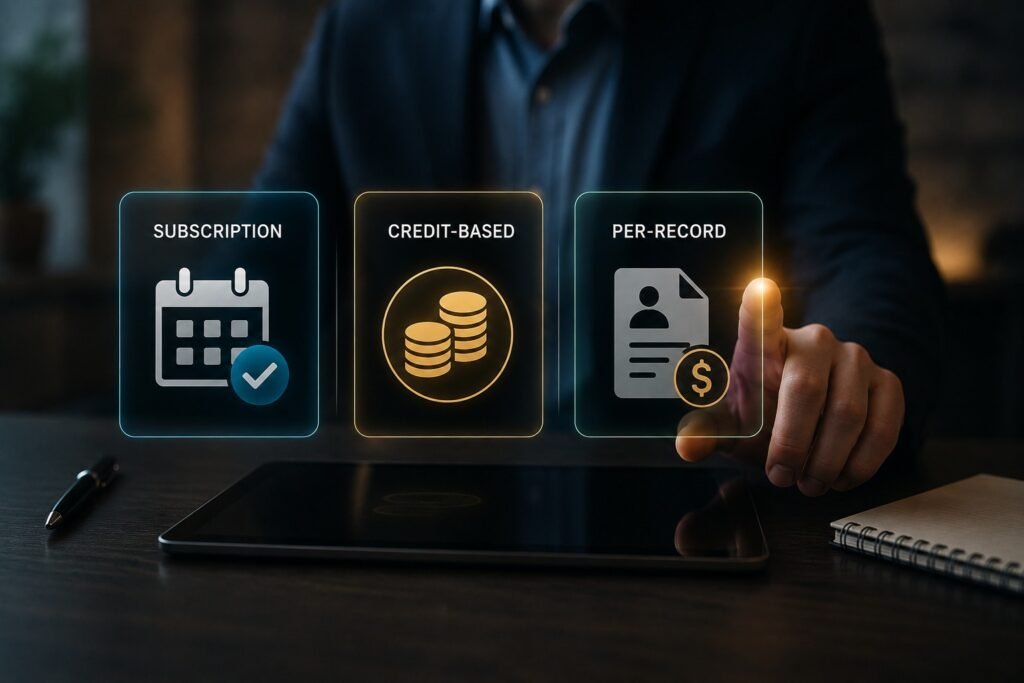
The Main Pricing Models
Most providers use one of three approaches.
Subscription pricing charges a recurring fee for access, often tiered by seats and features.
Credit-based pricing gives you a pool of credits to spend unlocking contacts.
Per-record pricing charges for each record purchased. Many vendors blend these — a subscription that includes a monthly credit allotment, for instance.
Subscription Pricing
Subscriptions suit teams with ongoing prospecting needs. You pay a predictable recurring fee, usually scaled by number of users and feature tier, in exchange for continued access to a maintained, refreshed database. The appeal is predictability and access to current data; the watch-out is paying for capacity or features you don’t fully use.
Credit-Based Pricing
Credit models tie cost to usage: you spend credits to reveal contact details, and buy more as needed. This can be efficient for variable or lower-volume usage, since you pay roughly for what you consume. The watch-out is that heavy usage can make credits more expensive than a flat subscription would have been.
Per-Record Pricing
Per-record pricing charges for each contact you acquire, which can make sense for one-off list purchases. It’s straightforward, but because a static purchase ages immediately, the cost-per-
usable-record can be higher than it looks once decay sets in. Per-record deals suit specific, time-boxed needs more than ongoing prospecting.
What Actually Drives the Cost
Price tracks several factors: data quality and freshness, coverage of your target, the depth of fields (direct dials and intent data cost more), the volume you need, and added features like enrichment and integrations. A higher price can be justified by better data; a low price can hide stale data. Judge cost against quality and fit, not in isolation.
How to Judge If a Price Is Fair
A fair price is one where the data quality, coverage of your specific target, and features match what you’re paying — not the lowest number available. Run a sample audit to confirm quality, check coverage in your niche, and compare cost against the value of the results you expect. Fair is about fit, not cheapness.

Key Takeaways
B2B database pricing spans free to enterprise, structured mainly as subscription, credit-based, or per-record models, often blended. Cost is driven by data quality, coverage, field depth, volume, and features. The right question isn’t “what’s the cheapest?” but “what’s fair for the quality and fit I need?” — which a sample audit helps you answer.
Frequently Asked Questions
How much does a B2B database cost?
It ranges widely, from free tools to enterprise subscriptions costing tens of thousands a year. The right cost depends on the model and tier that fit your needs, not a universal figure.
What are the main pricing models?
Subscription (recurring access fee), credit-based (spend credits to unlock contacts), and per-record (pay per contact acquired). Many vendors blend these.
Which pricing model is cheapest?
It depends on usage. Credits can be efficient for low or variable volume, while subscriptions suit steady, high-volume prospecting. Heavy credit use can exceed a subscription’s cost.
What drives the price of a database?
Data quality and freshness, coverage of your target, depth of fields like direct dials and intent data, volume, and added features such as enrichment and integrations.
Why is some data so much more expensive?
Higher-quality, continuously verified data and premium fields like accurate direct dials cost more to source and maintain, which is reflected in price.
Is cheaper data worse?
Not always, but a low price can hide stale or thinly verified data. Always confirm quality with a sample audit rather than assuming price reflects value.
What is per-record pricing best for?
One-off, time-boxed list purchases. Because static data ages immediately, per-record deals suit specific needs more than ongoing prospecting.
How do I know if a price is fair?
When data quality, coverage of your specific target, and features match what you pay. Test with a sample and compare cost against expected results.
Are there hidden costs?
Sometimes — overage fees, add-ons, or integration costs. We cover these in a dedicated guide; always ask what’s included before signing.
Should I pay annually or monthly?
Annual plans often cost less per month but lock you in; monthly offers flexibility at a higher rate. Weigh predictability against commitment for your situation.