Almost every B2B data vendor pitches “firmographic,” “technographic,” and “intent” data but few explain them in a way that helps you buy smarter. Each one targets a different question: what a company
is, what it
uses, and whether it’s
ready to buy. This guide explains all three and shows how layering them turns a huge universe into a short, prioritized list.
The Three Building Blocks of B2B Targeting
Firmographic, technographic, and intent data are the three lenses you use to find the right accounts. On their own, each is useful; stacked together, they let you ask far more precise questions of a database like “companies that fit our profile, use the tool we replace, and are showing buying signals this month.”

Firmographic Data: What a Company Is
Firmographics are the defining characteristics of a company: industry, employee headcount, annual revenue, location, ownership type, and growth indicators. They’re the B2B equivalent of demographics, and they’re the foundation of most targeting because they answer the first question every buyer asks “which companies fit my ideal customer profile?” Common filters include industry, employee bands, revenue ranges, and geography.
Technographic Data: What a Company Uses
Technographics describe a company’s technology stack its CRM, marketing automation, cloud provider, e-commerce platform, and so on. If your product complements or replaces a specific tool, technographics let you find exactly the companies that use it. Two classic plays: target companies that already use a tool you integrate with (a warm fit), or target users of a competitor you displace (a clear pain point).
Intent Data: When a Company Is Ready to Buy
Intent data signals that an account may be actively researching a purchase in your category. It’s derived from aggregated, anonymized behavioral signals for instance, a spike in a company’s research into a specific topic. The smart use is prioritization: work the high-intent accounts first. Treat intent as a probability, not proof it tells you where timing is likely good, not that a deal is guaranteed.
How to Layer the Three Together
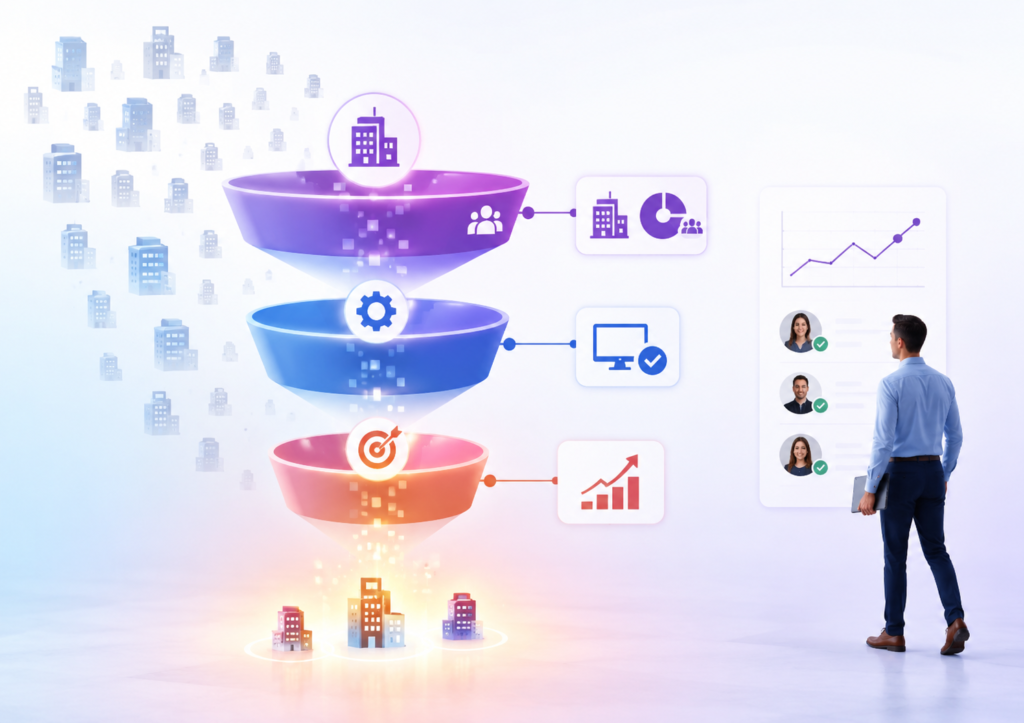
The power comes from stacking. Firmographics narrow to companies that
fit. Technographics confirm they have a
relevant context or pain. Intent flags which of those are
likely ready now. Applied in sequence, these three filters compress a database of millions into a focused shortlist your team can actually work which is where conversion rates climb.
Which Data Type Matters Most for You
It depends on what you sell. If fit is everything, firmographics dominate. If you’re a complementary or competitive tool, technographics are decisive. If timing is your edge and you have sales capacity to act fast, intent data adds the most. Most mature teams use all three in layers, but knowing which one drives your strategy tells you what to weigh most heavily when comparing vendors.
Evaluating Data Quality Before You Buy
Test each type on a sample. For firmographics, check the accuracy of size and industry on records you already know. For technographics, verify the detected tools against companies you’re familiar with. For intent, ask how signals are sourced, how fresh they are, and request a sample so you can judge whether the flagged accounts actually convert. Not all vendors do all three well, so evaluate on the types that matter to you.
Key Takeaways
Firmographic data answers “who fits,” technographic data answers “who has the right context,” and intent data answers “who’s ready now.” Firmographics are near-universal; technographics and intent are more specialized and often priced as add-ons. If those advanced types are core to your strategy, judge vendors specifically on their depth and accuracy not just total contact counts.
Frequently Asked Questions
What is firmographic data?
Firmographic data describes a company’s characteristics industry, size, revenue, and location. It’s the foundation of B2B targeting and answers which companies fit your ideal customer profile.
What is technographic data used for?
It identifies the technology a company uses, so you can target companies that run a tool you integrate with or one you compete against a strong signal of fit or pain.
Is intent data reliable?
It’s directional, not certain. Intent suggests an account may be in-market, so the best use is prioritizing which accounts to work first rather than treating a signal as a guaranteed sale.
Do all B2B databases include all three types?
No. Firmographics are nearly universal, but technographics and intent data are more specialized and often cost extra. If they’re core to your strategy, evaluate vendors specifically on those.
Which data type should I prioritize?
Whichever matches your strategy: firmographics for fit, technographics for complementary or competitive products, and intent for timing-driven outreach. Many teams layer all three.
How accurate is technographic data?
Technographic accuracy varies by technology and provider. Widely deployed software is generally easier to detect than niche or internally developed tools. The best providers continuously refresh their data to account for technology changes and new implementations.
Can I use firmographic, technographic, and intent data together?
Yes. Many successful sales and marketing teams combine all three. Firmographics identify companies that fit your ideal customer profile, technographics reveal relevant technology usage, and intent data helps prioritize accounts that may be actively researching solutions.
Which data type is best for account-based marketing (ABM)?
Most ABM programs start with firmographic data to identify target accounts, then layer in technographic and intent data to improve targeting and outreach timing. Using all three creates a more focused and efficient ABM strategy.
Does intent data help improve sales conversion rates?
It can. Intent data helps sales teams focus on accounts showing signs of active research or buying interest, which may improve response rates and sales efficiency. However, intent signals should be combined with other qualification criteria rather than used alone.
How do I know if a database’s intent and technographic data are worth paying extra for?
The answer depends on your sales strategy. If your product integrates with specific technologies, competes against certain platforms, or relies on identifying in-market buyers, the additional targeting precision can justify the cost. Testing the data on a pilot campaign is often the best way to evaluate its value.