Before you trust a vendor’s data, it helps to understand how that data is actually made. A B2B database isn’t pulled from a single magic source it’s assembled, cleaned, verified, and constantly refreshed. This guide walks through that pipeline in plain language, so you know what separates a well-built database from a risky one.
The B2B Data Pipeline at a Glance
A B2B database is built in stages: raw data is gathered from many sources, standardized and matched into single records, verified for accuracy, and then continuously refreshed as the world changes. The quality of each stage especially verification and refresh is what determines whether the data actually works for you.
Where the Raw Data Comes From
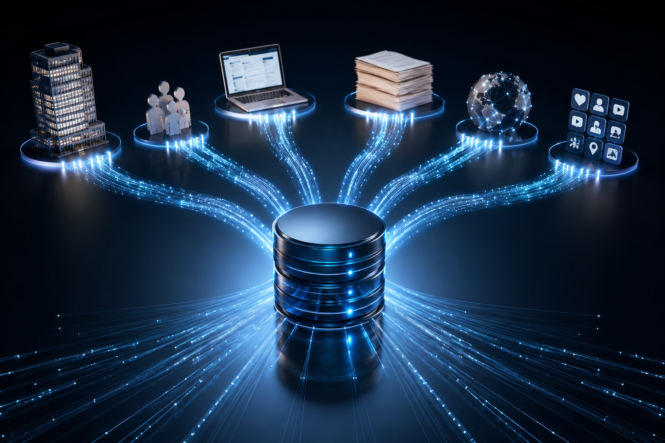
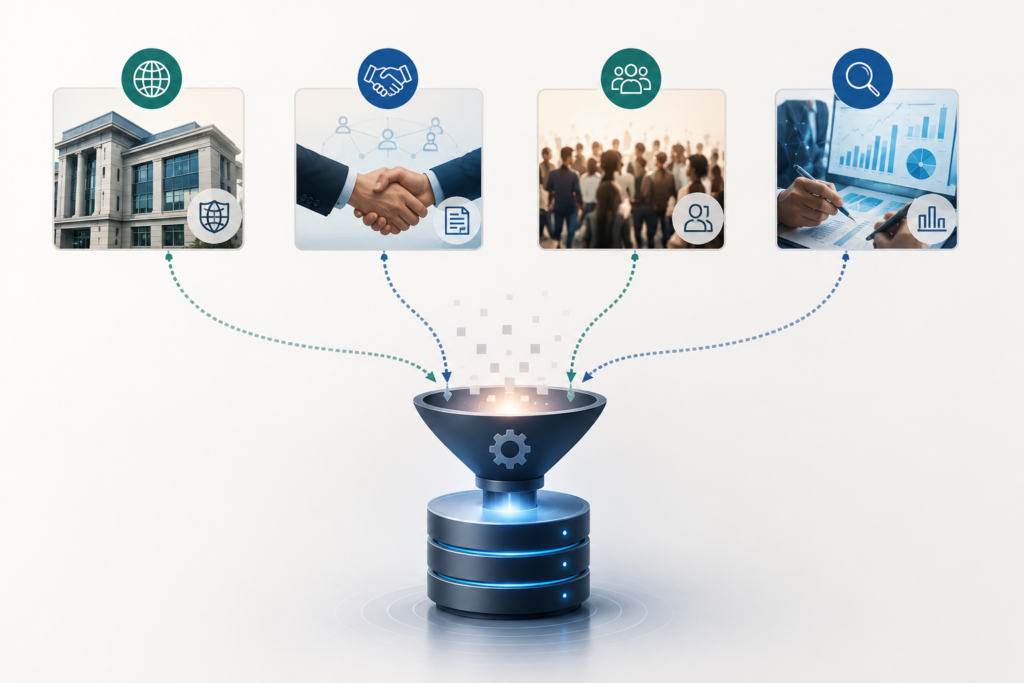
Reputable providers blend several sources: publicly available company and professional information, licensed data partnerships, contributions from users of the tool, and proprietary research teams. No single source is complete, so the mix matters. A vendor that can’t clearly describe where its data comes from should give you pause it often signals weak sourcing or compliance gaps.
Turning Scattered Data Into Clean Records
Raw inputs are messy. The same company might appear as “IBM,” “I.B.M.,” and “International Business Machines” across different sources. Providers use standardization and matching logic to normalize formats and merge those inputs into a single, deduplicated record per person and per company. Good matching is what stops your purchased data from arriving full of duplicates and conflicts.
How Data Gets Verified
Verification means confirming a data point is real and current. For email, providers use technical validation confirming the domain exists, the mailbox can receive mail, and the address fits known patterns rather than sending test emails. This catches most invalid addresses before they ever reach your campaign. Verification can be automated, done by human researchers, or both; human checks cost more but tend to be more reliable for high-value fields like direct dials.
Why Continuous Refresh Matters
Business contact data decays fast as people change jobs and companies change hands industry estimates commonly cite roughly 25–30% per year. The best databases verify continuously rather than in one big annual sweep, so records stay current. When evaluating a vendor, ask how frequently records are re-verified: “we refresh continuously” is far better than “we update yearly.”
The Three Layers of Data Inside a Record
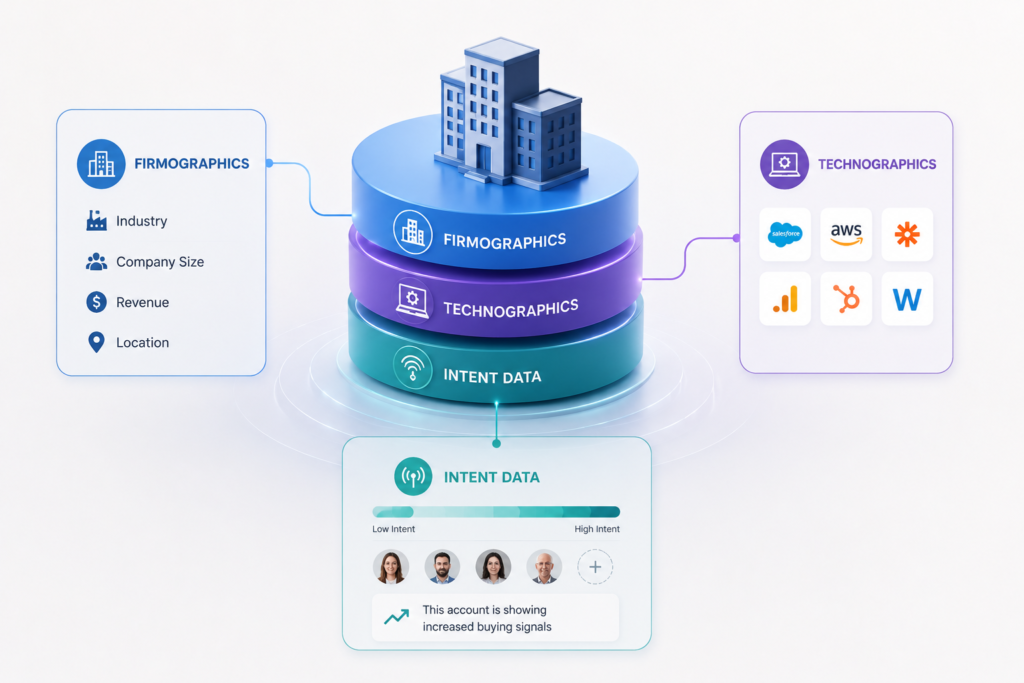
Most records contain three types of attributes.
Firmographics describe the company (industry, size, revenue, location).
Technographics describe the tools it uses.
Intent data signals that the account may be researching a purchase. Intent in particular is probabilistic it suggests a company
may be in-market, which helps you prioritize, not a guarantee they’ll buy.
Why Two Vendors Disagree on the Same Company
If two providers show different data for the same company, it’s because they use different sources, matching logic, and verification cadence. One may have deeper coverage in your industry or region; another may have fresher direct dials. This is exactly why running a side-by-side sample test before buying is worth the effort the “right” vendor is the one that’s most accurate for
your target, not in general.
Questions to Ask About a Vendor’s Data Pipeline
Four questions reveal most of what you need to know: Where does your data come from? How is it verified? How often is it refreshed? And how do you handle compliance and sourcing consent? Clear, specific answers signal a well-run pipeline; vague or evasive ones signal data you’ll likely regret buying.
Key Takeaways
A B2B database is the product of a multi-stage pipeline sourcing, matching, verification, and refresh not a static snapshot. The stages that matter most to your results are verification quality and refresh frequency. When you understand the pipeline, you can ask sharper questions and spot the vendors cutting corners.
Frequently Asked Questions
Where do B2B databases get their data?
From a blend of publicly available business information, licensed data partnerships, user contributions, and proprietary research and verification. The quality of the mix and how well it’s verified varies a lot between vendors.
How is email data verified without emailing people?
Providers use technical validation: confirming the domain exists, the mailbox can receive mail, and the address matches known patterns. This catches most invalid addresses before they reach your campaign.
How often should a B2B database be refreshed?
As often as possible ideally continuously. Because contact data decays around 25–30% per year, the best providers re-verify on an ongoing cycle rather than once a year.
Why do two vendors have different data on the same company?
They use different sources, matching logic, and verification schedules, so coverage and freshness differ by industry and region. A sample test shows which vendor is most accurate for your specific targets.
What’s the difference between human-verified and algorithm-verified data?
Algorithm verification is faster and cheaper; human verification is more reliable for high-value fields like direct dials. Many providers use both, applying human checks where accuracy matters most.
How can I evaluate the quality of a B2B database before buying?
The best approach is to request a sample and test it against your target market. Check email validity, contact accuracy, job title relevance, and company coverage. A small test often reveals more than any marketing claim.
Why does contact data become outdated so quickly?
People change jobs, get promoted, switch departments, and companies reorganize constantly. Because of this natural churn, even accurate records can become outdated within months, making continuous verification essential.
Are direct dials more difficult to verify than email addresses?
Yes. Email addresses can often be validated through technical checks, while direct dials typically require additional research, human verification, or multiple data sources to confirm accuracy. As a result, direct dial quality varies significantly between providers.
What data accuracy rate should I expect from a B2B database?
No provider maintains 100% accuracy because business data changes every day. The most reliable vendors focus on continuous verification and transparency, with accuracy levels varying by industry, geography, and data type.
How do B2B database providers handle missing or incomplete information?
Providers use a combination of research, third-party partnerships, automated data collection, and ongoing verification to fill gaps. However, some industries and regions are easier to cover than others, so completeness can vary across datasets.